Guide · Sharks
Great White Shark Facts: Size, Teeth, Speed and Lifespan
How big great white sharks get, how many teeth they have, how fast they swim, how long they live and whether they are dangerous. Fact-checked against the latest research.
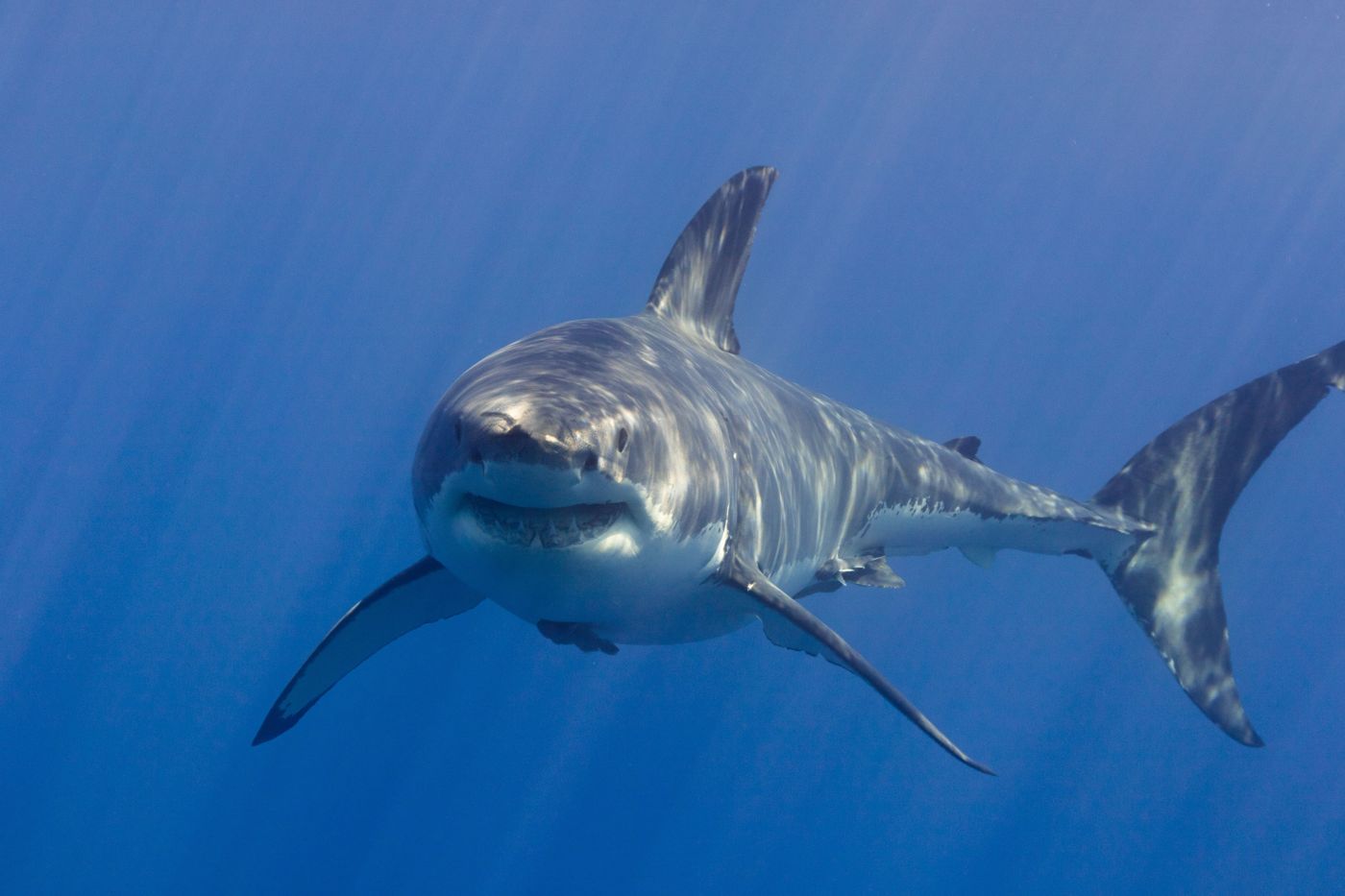
The great white shark is the most famous predator in the ocean, and one of the most misunderstood. It can live for more than 70 years, cross entire oceans and launch its whole body out of the water. And despite its reputation, it almost never goes looking for people.
Here are the facts about great white sharks: how big they get, how many teeth they have, how fast they swim and how long they live, with the science behind each one.
Great white shark quick facts
- Scientific name: Carcharodon carcharias
- Length: up to around 6 metres (females are bigger than males)
- Weight: more than 2 tonnes for the largest females
- Teeth: around 300 at any one time, constantly replaced
- Lifespan: 70 years or more
- Diet: fish, rays and other sharks when young; seals and sea lions as adults
- Where they live: cool and temperate coastal seas worldwide
- Conservation status: Vulnerable (IUCN Red List)
How big do great white sharks get?
Great white sharks are the largest predatory fish alive. Reliable measurements of the biggest individuals top out at around 6 metres long, and the heaviest can weigh more than two tonnes.
Females grow much bigger than males. Adult males are usually around 3.5 to 4 metres, while the giants are almost always female. You will see claims of great whites 7 or 8 metres long, but none of these has ever been reliably confirmed.
How many teeth does a great white shark have?
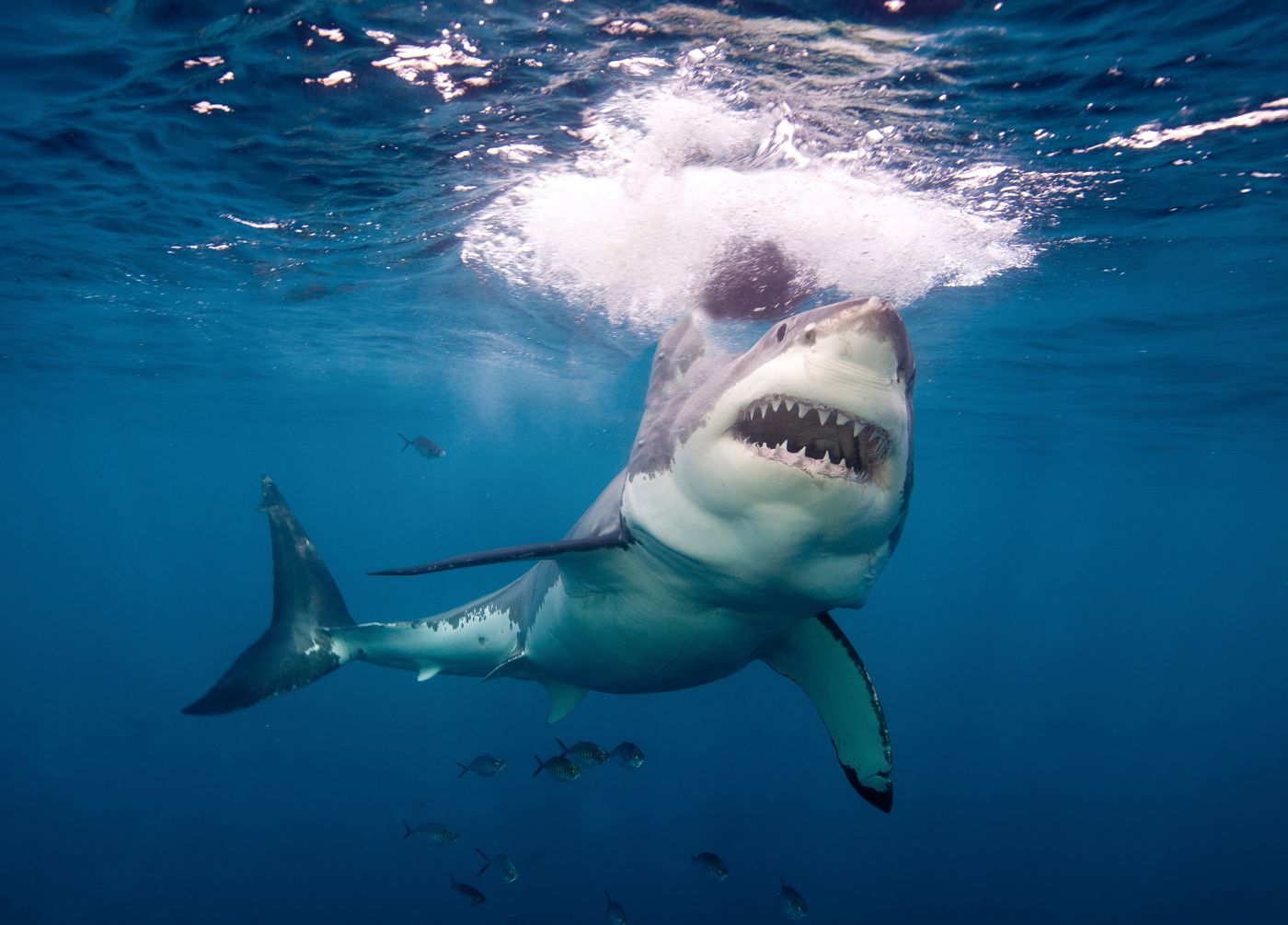
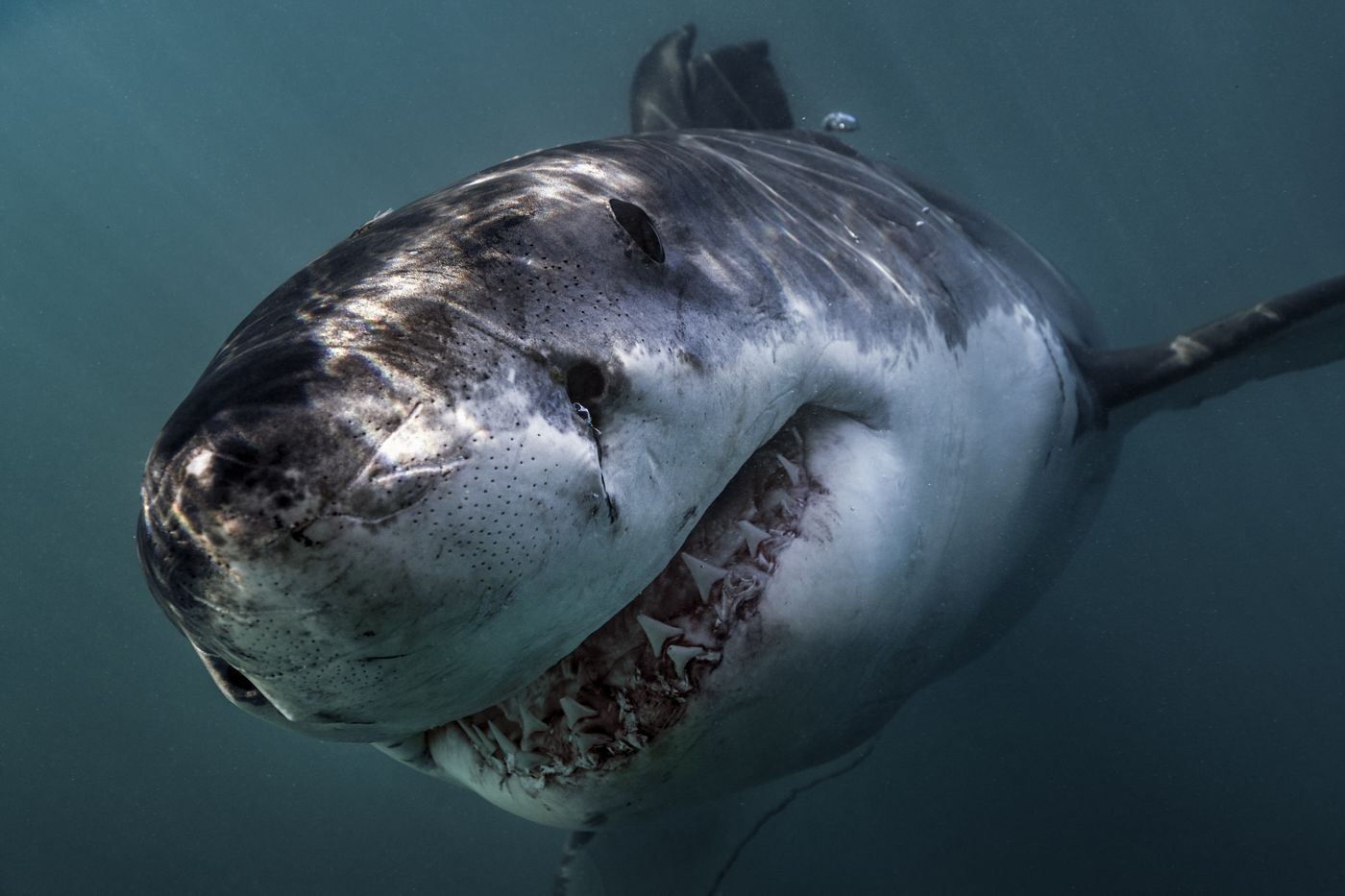
A great white has around 300 teeth at any one time, arranged in several rows. Only the front rows are used for biting. The rows behind are replacements waiting their turn.
When a tooth breaks or falls out, the one behind it moves forward like a conveyor belt, so a single shark can get through thousands of teeth in its lifetime. Each tooth is a serrated triangle, built for slicing rather than chewing. Great whites tear off large chunks and swallow them whole.
How fast can a great white shark swim?
Most of the time, great whites cruise slowly to save energy. When they attack, they are capable of short, explosive bursts, with top speeds usually estimated at around 40 km/h. Precise figures are hard to measure in the wild, so treat any single number with some caution.
That burst of speed is what powers one of the most spectacular hunts in nature.
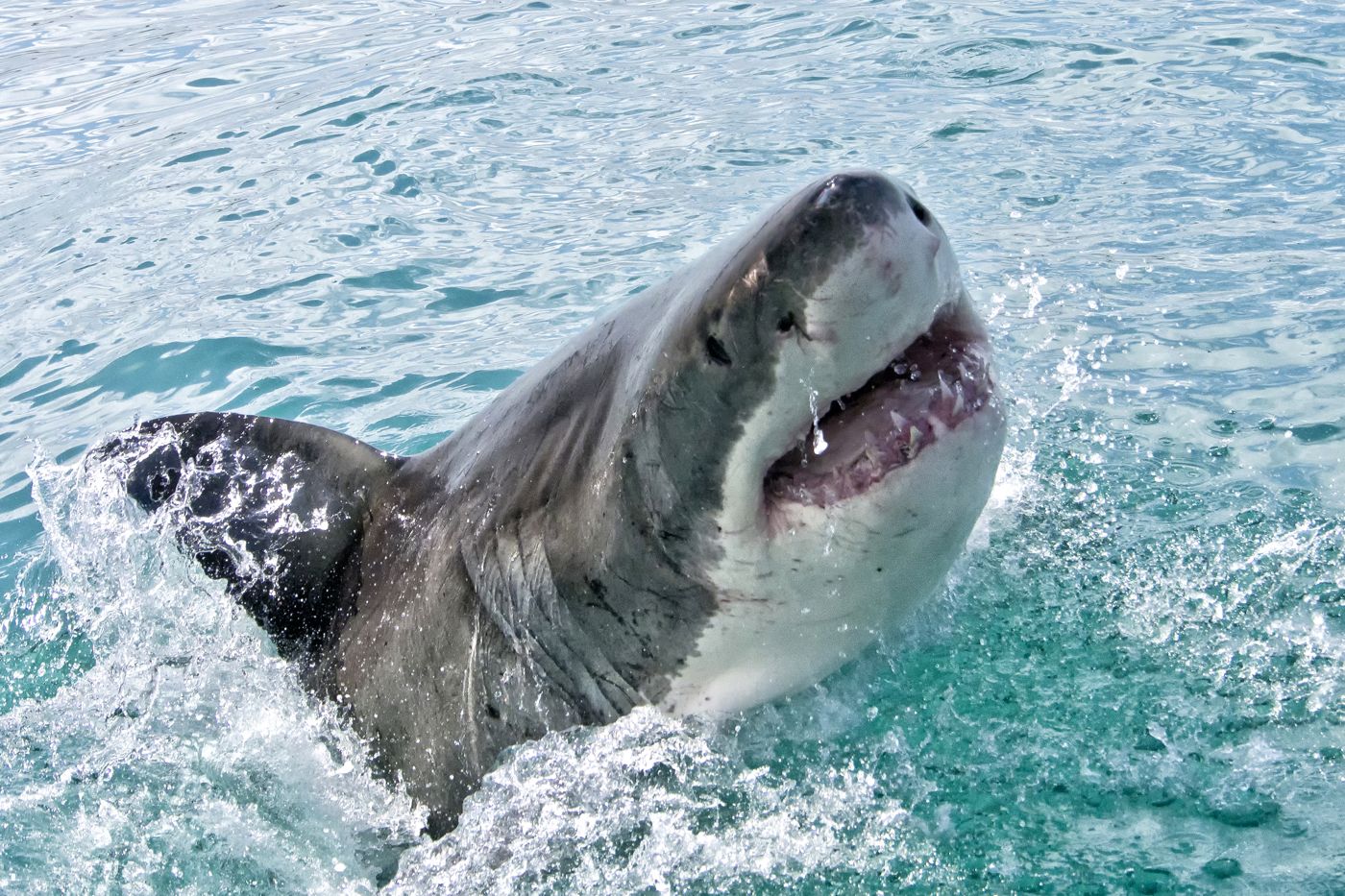
Great whites can fly (almost)
Off South Africa, great whites hunt Cape fur seals by ambushing them from below. The shark spots the seal's silhouette against the bright surface, then races upwards so fast that it can launch its entire body out of the water. This behaviour, called breaching, is famous around Seal Island in False Bay.
How long do great white sharks live?
For a long time, scientists thought great whites lived for around 30 years. Then a 2014 study used a clever trick: radiocarbon left in the oceans by nuclear bomb tests in the 1950s and 60s, which shows up as a time marker in the sharks' backbones. The oldest male in the study was estimated to be 73 years old.
Great whites also grow up slowly. A follow-up study in 2015 estimated that males in the North Atlantic reach maturity at around 26, and females at around 33. That is a big reason they are so vulnerable: a population that loses adults takes decades to recover.
A shark that keeps itself warm
Most fish are the same temperature as the water around them. Great whites are different. Using a network of blood vessels that recycles heat, they can keep their swimming muscles, eyes and brain warmer than the surrounding sea. That helps them stay fast and alert in cold water, where seals are plentiful.
Super senses (and one myth)
Great whites can detect the tiny electrical signals given off by the muscles of living animals, using jelly-filled pores on their snouts called the ampullae of Lorenzini. Their sense of smell is excellent too, although the famous claim that they can smell a single drop of blood from a mile away is an exaggeration.
Their skin is just as clever. It is covered in tiny tooth-like scales called denticles, which cut drag and help them glide through the water.
Where do great white sharks live?
Great whites live in cool and temperate coastal waters all over the world. Some of the best-known hotspots are South Africa, southern Australia, California and Mexico's Guadalupe Island, and the north-eastern United States around Cape Cod.
They are also extraordinary travellers. In 2003, scientists tagged a female off South Africa and named her Nicole. She swam to Western Australia and was back in South African waters within nine months, a round trip of around 20,000 kilometres. It was the first direct proof that great whites cross entire oceans.
What do great white sharks eat?
Young great whites mostly eat fish, rays and smaller sharks, because their jaws are not yet strong enough for bigger prey. As they grow, they switch to energy-rich marine mammals such as seals and sea lions. They also scavenge on dead whales, which can feed many sharks at once for days.
Are great white sharks dangerous to humans?
Great whites are responsible for more recorded unprovoked bites on people than any other shark, but bites are still extremely rare, and people are not their natural prey.
One explanation is mistaken identity. A 2021 study modelled how young great whites see the world, and found that from below, a swimmer or surfer on the surface looks very similar to a seal. Young sharks, which have poorer eyesight than adults, are the most likely to make that mistake.
What eats a great white shark?
Very little, with one big exception: orcas. Off South Africa, a pair of orcas has been hunting great whites and eating their energy-rich livers. When the orcas show up, the great whites leave the area, sometimes for weeks. We cover this in 10 Ocean Animals That Hold Incredible World Records.
Are great white sharks endangered?
Great white sharks are listed as Vulnerable on the IUCN Red List. Because they grow slowly, mature late and have few young, they cannot replace losses quickly. The main threats come from people: accidental capture in fishing gear, shark nets and, in the past, trophy hunting. Great whites are now protected in many countries, including South Africa, Australia and the United States.
Frequently asked questions
How big is the biggest great white shark ever recorded?
Reliable measurements of the largest great whites top out at around 6 metres long. Bigger claims exist, but none has been properly confirmed.
How many teeth does a great white shark have?
Around 300 at any one time, arranged in rows. Lost teeth are constantly replaced, so a great white can go through thousands in its lifetime.
Can great white sharks smell blood from a mile away?
No. Great whites have an excellent sense of smell, but the idea that they can detect a single drop of blood from a mile away is a myth.
Are there great white sharks in UK waters?
There has never been a confirmed sighting of a great white shark in British waters, although scientists think the seas off south-west England could sometimes be warm enough for them.
Why are there no great white sharks in aquariums?
Several aquariums have tried. Monterey Bay Aquarium in California kept a few young great whites for months at a time before releasing them back into the wild, but no aquarium has kept an adult long term. They travel huge distances and do not cope well in captivity.
Want more?
Love sharks? Follow SeaFactual for a new ocean fact every day, and get the fact of the week straight to your inbox using the form below.
Sources
- NOAA Fisheries
- Florida Museum of Natural History
- Hamady et al. 2014 (PLOS ONE)
- Natanson & Skomal 2015 (Marine and Freshwater Research)
- Bonfil et al. 2005 (Science)
- Ryan et al. 2021 (Journal of the Royal Society Interface)
- IUCN Red List (2018 assessment)
- International Shark Attack File
- Monterey Bay Aquarium
- The Shark Trust