Orca Facts: Size, Diet, Lifespan and Are Killer Whales Dangerous?
How big orcas get, what they eat, how long they live, why they hunt great white sharks and whether killer whales are dangerous to people. Fact-checked orca facts.
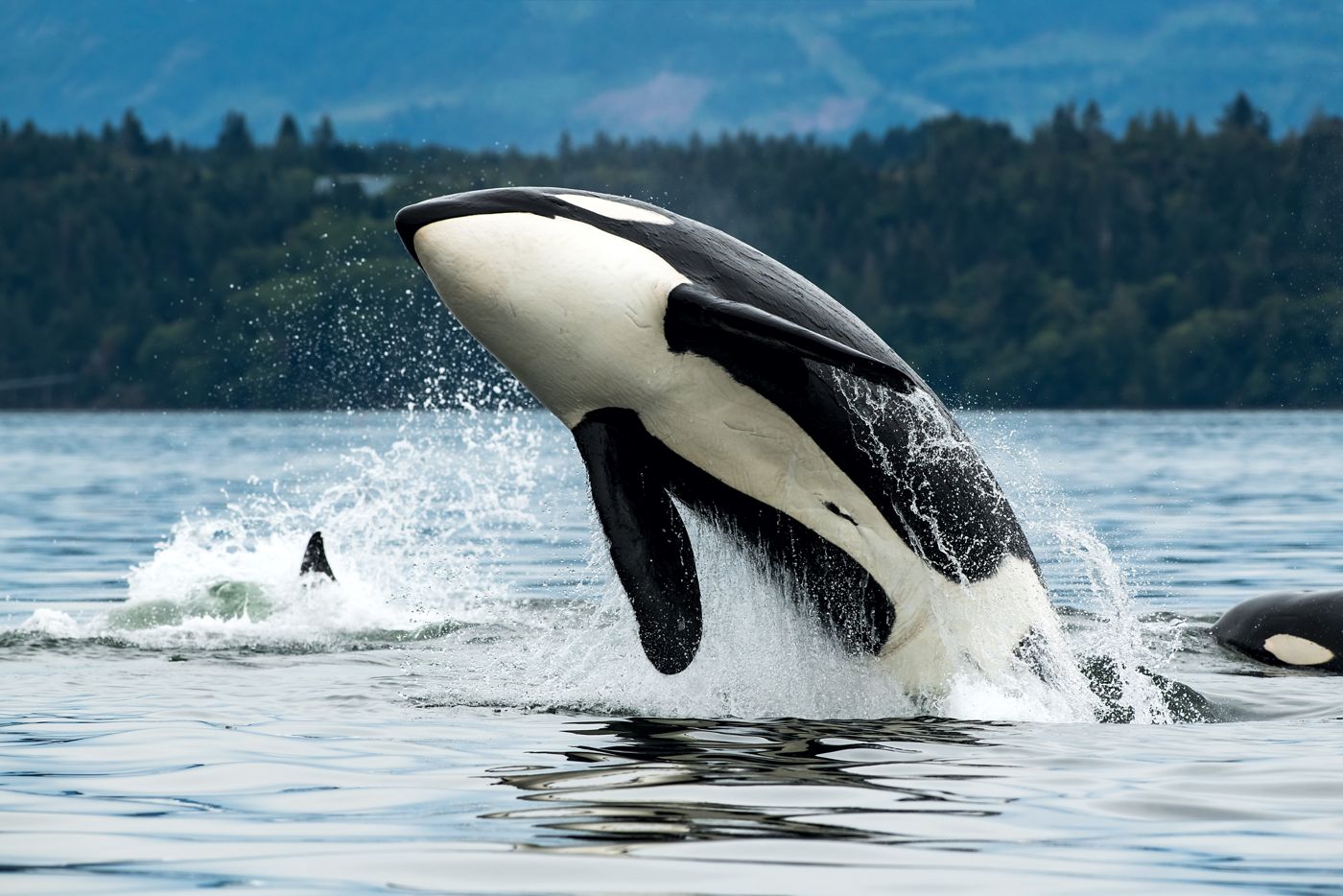
Orcas, also called killer whales, sit at the very top of the ocean food chain. They hunt great white sharks, make waves to wash seals off the ice and pass on hunting skills like family traditions. And the most important member of the family is usually a grandmother.
Here are the facts about orcas: how big they get, what they eat, how long they live and whether they are dangerous to people.
Orca quick facts
- Scientific name: Orcinus orca
- What it is: the largest member of the dolphin family, not a true whale
- Length: males up to around 9 to 10 metres; females smaller
- Weight: the largest males can weigh around 10 tonnes
- Lifespan: males around 30 years on average; females around 50, and some 90 or more
- Diet: fish, seals, sea lions, dolphins, sharks and even large whales, depending on the population
- Where they live: every ocean, from the Arctic and Antarctic to the tropics
- Conservation status: Data Deficient globally; some populations are endangered
Is an orca a whale or a dolphin?
Despite the name, the killer whale is a dolphin, the biggest one on Earth. Its family, the oceanic dolphins, also includes bottlenose dolphins and pilot whales. The name "killer whale" is thought to come from old sailors' name "whale killer", after they saw orcas hunting large whales.
How big do orcas get?
Male orcas are much bigger than females. According to NOAA, the largest males reach around 10 metres long and can weigh around 10 tonnes. Most adults are smaller, typically 6 to 8 metres.
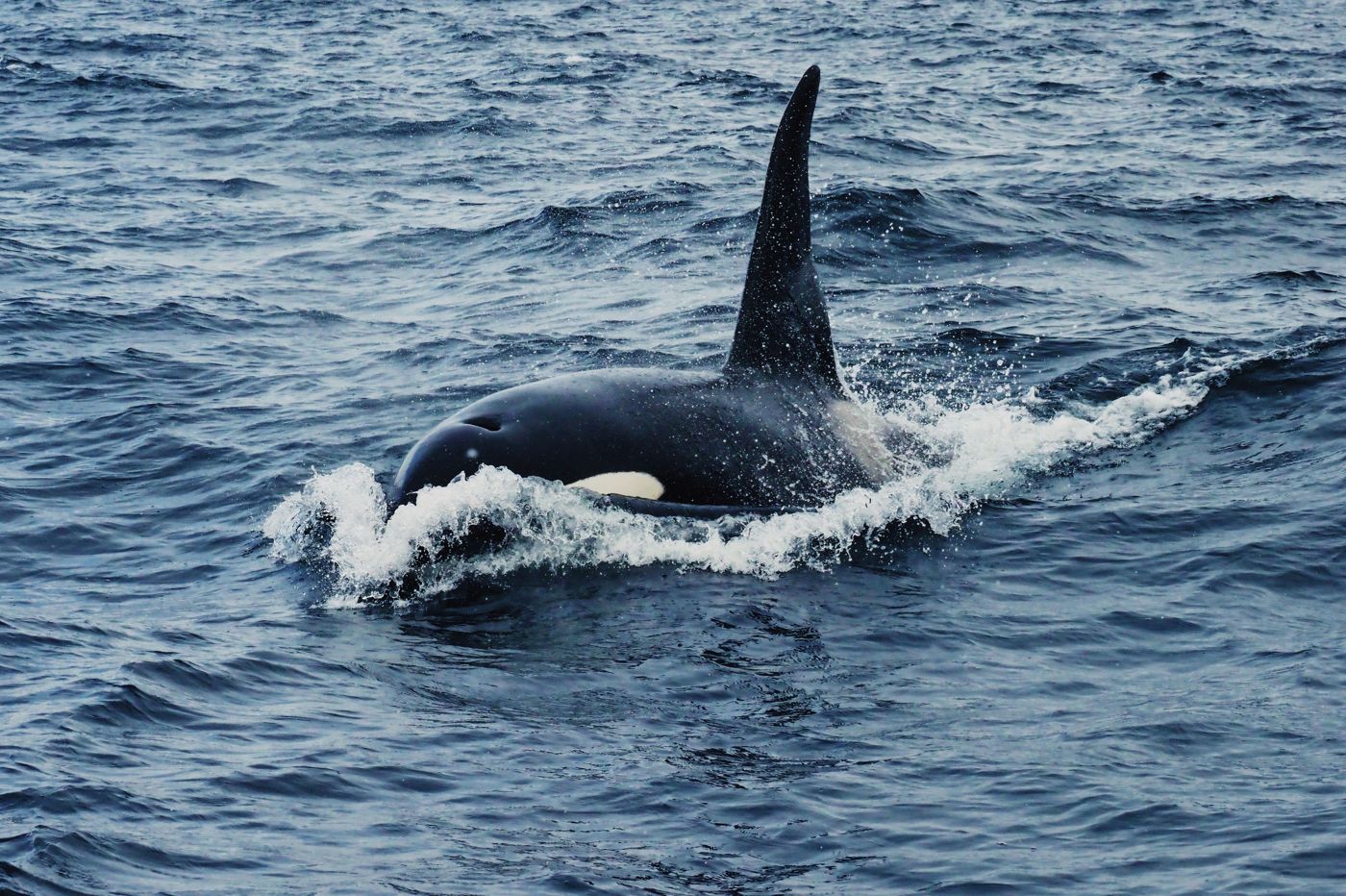
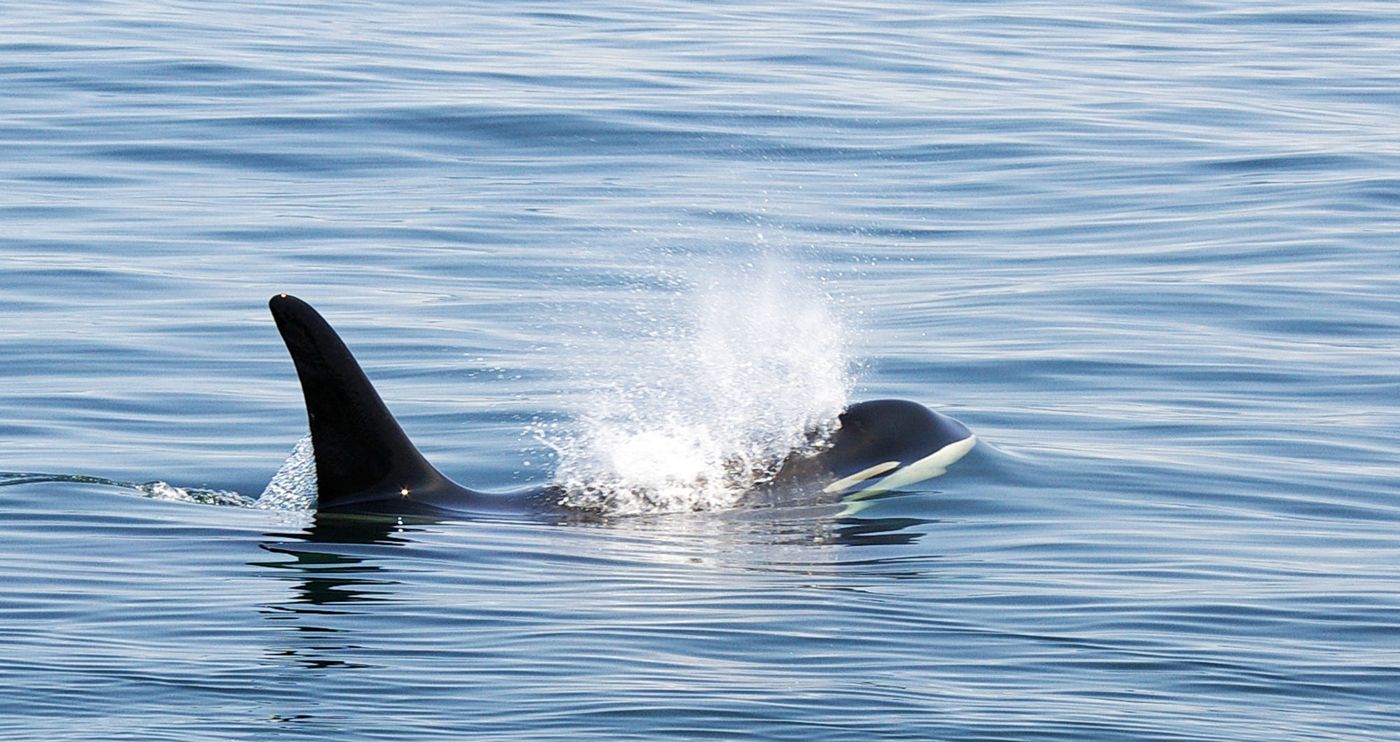
The easiest way to tell males and females apart is the dorsal fin. A male's fin is tall and straight, and can stand up to 1.8 metres high, taller than most people. A female's fin is shorter and curved backwards.
What do orcas eat?
Orcas eat almost anything, but each population specialises. Scientists recognise several types, or ecotypes, that look slightly different, hunt different prey and rarely mix:
- Residents in the north-east Pacific eat fish, especially Chinook salmon.
- Bigg's (transient) orcas hunt marine mammals such as seals, sea lions, porpoises and even whale calves.
- Offshore orcas travel far out to sea and feed on fish and sharks.
- In Antarctica, some orcas swim side by side to create a wave that washes seals off floating ice, while others hunt penguins or fish.
Each group passes its hunting techniques down through the generations, which is why scientists describe orcas as having culture.
Why do orcas hunt great white sharks?
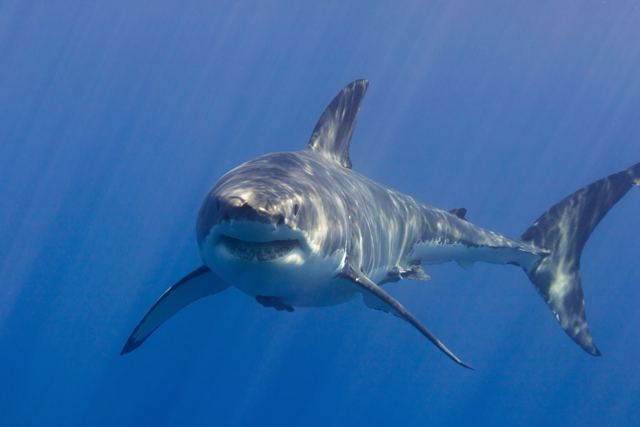
Off South Africa, two male orcas nicknamed Port and Starboard (after the bends in their dorsal fins) have been killing great white sharks since around 2017. Sharks washed up on the beach near Gansbaai with one organ precisely removed: the liver, which is huge and packed with energy-rich oil.
A 2022 study tracked tagged great whites and found that when the orcas arrived, the sharks fled the area, sometimes for weeks or months. One of the ocean's most feared predators had become prey. Read more in our great white shark facts.
How long do orcas live?
Like humans, female orcas live much longer than males. NOAA says females typically live around 50 years, and some reach 90 or more in the wild. Males live around 30 years on average, and some reach 60.
Orcas are also one of very few animals that go through menopause. Females stop breeding in their 30s or 40s but can live for decades afterwards. A 2019 study of orcas off Washington State and British Columbia found that young orcas were 4.5 times more likely to die in the two years after their grandmother died. The effect was strongest when salmon were scarce, because the older females lead the family to food.
Orcas have family dialects
Orcas live in close family groups called pods, often led by the oldest female. In some populations, sons and daughters stay with their mothers for life.
Each pod has its own set of calls, a little like a local accent. Pods that share similar calls are often related, and researchers can identify a family just by listening to it underwater.
Are orcas dangerous to humans?
There is no record of a wild orca killing a person. Orcas are powerful predators and should always be given space, but humans are not on their menu.
The famous exception is captivity: orcas held in marine parks have injured and killed trainers, which is one reason many scientists argue they should not be kept in tanks.
Why do orcas attack boats off Spain and Portugal?
Since 2020, a small group of orcas off Spain and Portugal has been approaching sailing boats and pushing or biting their rudders. Hundreds of interactions have been recorded and several boats have sunk, although no one has been hurt.
Nobody knows for sure why it started. One theory links it to an adult female nicknamed White Gladis, who may have had a bad experience with a boat. Another is that it is a fad spread by young orcas, a bit like a game. This Iberian population is very small, at only a few dozen animals, and is considered critically endangered.
Are orcas endangered?
Orcas are listed as Data Deficient on the IUCN Red List. That is partly because scientists are still working out whether some ecotypes are actually separate species. Some populations are clearly in trouble. The Southern Resident orcas of the north-east Pacific are listed as endangered in the United States, threatened by a lack of salmon, pollution and boat noise.
Frequently asked questions
Why are orcas called killer whales?
The name is thought to come from sailors who watched orcas hunting large whales and called them "whale killers". Over time the words swapped round. Orcas are actually the largest species of dolphin.
How fast can an orca swim?
Orcas are among the fastest marine mammals. They can sprint in short bursts at an estimated 45 km/h or more, though they usually cruise much more slowly.
Do orcas eat great white sharks?
Yes. Off South Africa, a pair of orcas has killed several great whites, mainly eating their energy-rich livers. Orcas in other parts of the world also hunt sharks.
Are there orcas in the UK?
Yes. A tiny group known as the West Coast Community lives off western Scotland and Ireland, and orcas are regularly seen around Shetland and Orkney, where they hunt seals.
Has an orca ever killed a human?
There is no record of a wild orca killing a person. All known human deaths caused by orcas have involved animals kept in captivity.
Want more?
Follow SeaFactual for a new ocean fact every day, and get the fact of the week in your inbox using the form below.
Sources
- NOAA Fisheries
- Nattrass et al. 2019 (PNAS)
- Towner et al. 2022 (Ecosphere)
- Engelbrecht et al. (African Journal of Marine Science)
- IUCN Red List
- Orca Ibérica / Atlantic Orca Working Group
- Natural History Museum London
- Whale and Dolphin Conservation