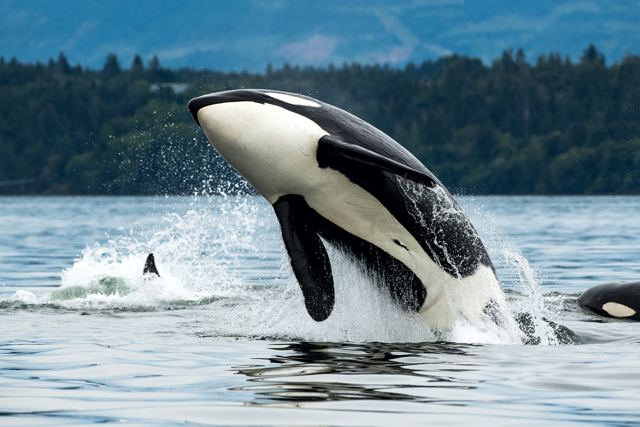
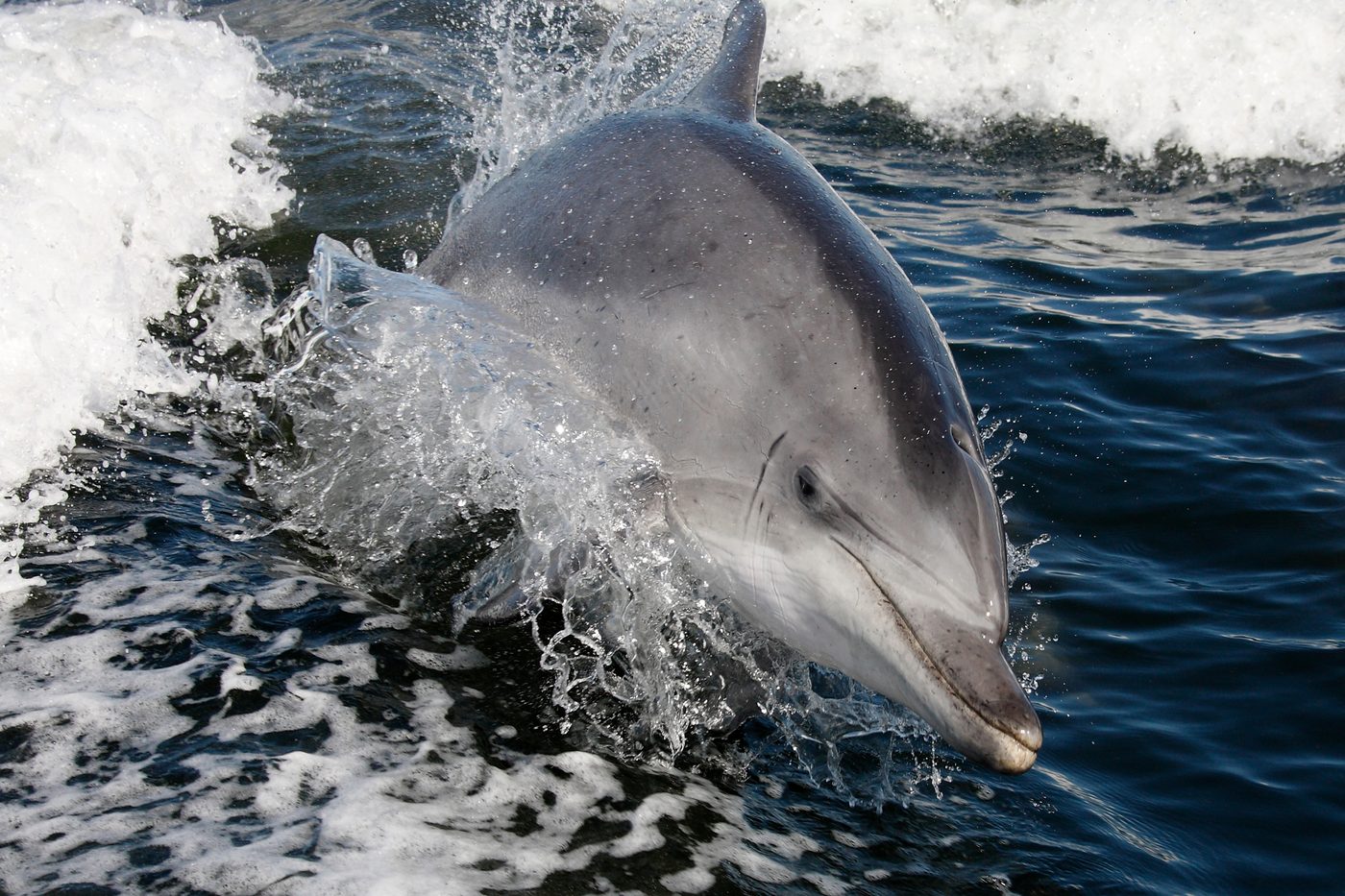
The bottlenose is the dolphin most people picture, and one of the best studied animals in the sea.
In this article
Dolphins have names. Not names like ours, but a whistle so personal that other dolphins copy it to get their attention. They can rest half their brain at a time, recognise themselves in a mirror, and in one corner of Australia they carry sponges on their beaks as tools, a trick passed from mothers to daughters.
There are around 40 species of dolphin, including the orca, the biggest of them all. This guide focuses on the one most people picture: the bottlenose dolphin, one of the most studied animals in the ocean.
Bottlenose dolphin quick facts
- Scientific name
- Tursiops truncatus (common bottlenose dolphin)
- Length
- About 1.8 to 4 metres
- Weight
- About 135 to 635 kg
- Lifespan
- At least 40 years; some females live past 60
- Diet
- Fish, squid and octopus
- Pregnancy
- About 12 months, usually one calf
- Superpowers
- Echolocation, signature whistles, tool use in some populations
- In the UK
- Resident groups off eastern Scotland and in Cardigan Bay, Wales
How big are bottlenose dolphins?
According to NOAA Fisheries, common bottlenose dolphins are 1.8 to 4 metres long and weigh about 135 to 635 kg. Size varies between populations. NatureScot describes the bottlenose dolphins around Scotland as a large-bodied dolphin, reaching up to 4 metres when fully grown.
They are not the biggest dolphins, though. That title belongs to the orca, which is a dolphin, not a whale, and can grow to around 10 metres. Read more in our orca facts.
How long do dolphins live?
Bottlenose dolphins can live at least 40 years, and NOAA notes that some females outlive males and reach 60 or more. Long-term studies in places such as Sarasota Bay in Florida, where scientists have photographed the same dolphins for more than 50 years, are how we know.
Dolphins grow up slowly. Females usually start breeding somewhere between 5 and 15 years old and are pregnant for about 12 months. A calf nurses for around 20 months and stays with its mother for 3 to 6 years, so a female typically has a calf only every 3 to 6 years. That slow pace is one reason dolphin populations take a long time to recover when numbers fall.
Do dolphins have names?
In a sense, yes. Each bottlenose dolphin develops its own signature whistle, a pattern of rising and falling pitch that is unique to it, much like a name.
In a 2006 study, researchers played wild dolphins computer-made versions of whistles with the caller's actual voice removed. The dolphins still responded more to the whistles of close relatives, showing that the shape of the whistle itself carries the identity, not just the sound of the voice.
A 2013 study went further. When researchers played a dolphin a copy of its own signature whistle, it often whistled back. The scientists concluded that dolphins copy each other's whistles to call to a specific individual, which is the closest thing yet found in another animal to using a learned name.
How do dolphins sleep?
Dolphins breathe air, so they cannot fall fully unconscious underwater the way we do in bed. Instead, they rest one half of the brain at a time. This is called unihemispheric slow-wave sleep.
According to a review of sleep in whales and dolphins, one side of the brain shows the slow waves of deep sleep while the other stays awake, and the eye linked to the waking half often stays open. It lets a resting dolphin keep surfacing to breathe, stay with its group and watch for danger. Then the halves swap over.
How smart are dolphins?
Dolphins have large, complex brains and are among the most intelligent animals studied. Some of the strongest evidence:
- Mirror self-recognition. In a 2001 study, captive bottlenose dolphins were marked on parts of their bodies they could not see. They swam to a mirror and twisted to inspect the marks, behaviour taken as a sign they recognised themselves. Only a few animals, such as great apes and elephants, have passed similar tests.
- Echolocation. Dolphins send out clicks and listen to the echoes to find prey and read their surroundings, even in murky water.
- Learned culture. Different populations hunt in different ways, and calves learn those techniques from their mothers.
The best example of that last point is a population in Western Australia that uses tools.
Do dolphins use tools?

Yes. In Shark Bay, Western Australia, some bottlenose dolphins tear off cone-shaped marine sponges and wear them over their beaks while they search the seabed for food. The behaviour was first described in 1997.
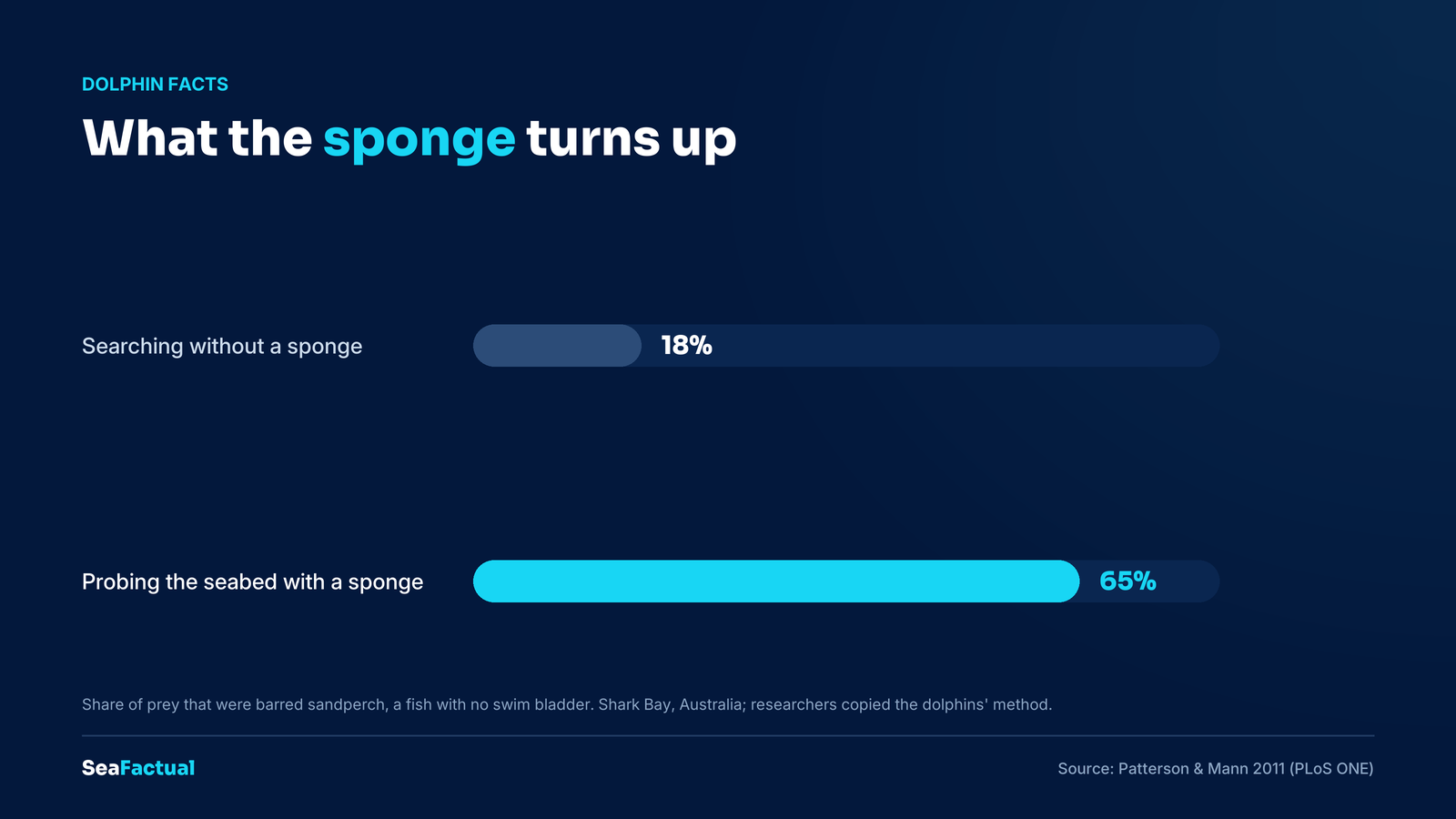
The sponge seems to work like a glove, protecting the dolphin's beak as it probes sharp, rubbly seafloor. To find out what it is for, researchers copied the technique themselves, probing the seabed and recording what they flushed out. Barred sandperch made up 65% of the prey they found this way, but only 18% of prey found without probing. Sandperch hide on the bottom and have no swim bladder, the gas-filled organ that echoes strongly back to a dolphin's clicks, so they are hard to find any other way.
Sponging is also a rare case of animal culture. Genetic research found that it is passed down almost entirely from mothers to their offspring, especially daughters, and that the spongers appear to descend from a single recent ancestor, nicknamed "Sponging Eve". At the time of the 2011 study, only about 54 dolphins in the area were known to do it.
What do dolphins eat?
Bottlenose dolphins eat mostly fish, plus squid and octopus, and their diet changes with where they live. Different groups have their own hunting tricks. Some herd fish against mudbanks, some drive shoals into tight balls, and others, like the Shark Bay spongers, specialise in prey that other dolphins ignore.
Are dolphins dangerous?
Wild dolphins rarely harm people, but they are large, powerful wild animals and should be treated that way. Problems usually start when people feed them or try to swim with and touch them. Dolphins that learn to expect food from people can become pushy, get injured by boats and fishing gear, and pass the habit on to their calves. NOAA lists illegal feeding and harassment among the threats to bottlenose dolphins in the US.
The safest way to enjoy them is from a distance: watch from the shore or a responsible boat trip, let the dolphins choose whether to approach, and never chase, feed or touch them.
Where can you see dolphins in the UK?
The UK has some of the best dolphin watching in Europe.
- The Moray Firth, Scotland. According to NatureScot, the east coast of Scotland supports a resident population of around 224 bottlenose dolphins, monitored since 1990 and currently thought to be increasing. Chanonry Point near Inverness is one of the most famous places in Britain to watch them from land.
- Cardigan Bay, Wales. Another stronghold for bottlenose dolphins, studied for decades by the Sea Watch Foundation.
- Cornwall and the south-west. Common and bottlenose dolphins are regularly seen from headlands and boats.
Frequently asked questions
Are dolphins mammals or fish?
Dolphins are mammals. They breathe air through a blowhole, are warm-blooded, give birth to live young and feed their calves on milk.
Is an orca a dolphin?
Yes. The orca, or killer whale, is the largest member of the dolphin family. See our orca facts for more.
How many species of dolphin are there?
There are around 40 species, including a handful of river dolphins. Scientists still debate the exact number, because some populations may turn out to be separate species.
Do dolphins really sleep with one eye open?
Often, yes. When one half of a dolphin's brain sleeps, the eye controlled by the other, waking half tends to stay open.
Can you see dolphins in the UK?
Yes. The Moray Firth in Scotland and Cardigan Bay in Wales both have resident bottlenose dolphins, and dolphins are often seen off Cornwall.
Want more?
Follow SeaFactual for a new ocean fact every day, and get the fact of the week in your inbox using the form below.
Sources and further reading
- NOAA Fisheries: Common bottlenose dolphin
- NatureScot: Bottlenose dolphin
- Janik, Sayigh & Wells 2006, PNAS: Signature whistle shape conveys identity information to bottlenose dolphins
- King & Janik 2013, PNAS: Bottlenose dolphins can use learned vocal labels to address each other
- Lyamin et al. 2008, Neuroscience & Biobehavioral Reviews: Cetacean sleep, an unusual form of mammalian sleep
- Reiss & Marino 2001, PNAS: Mirror self-recognition in the bottlenose dolphin
- Smolker et al. 1997, Ethology: Sponge carrying by dolphins
- Krützen et al. 2005, PNAS: Cultural transmission of tool use in bottlenose dolphins
- Patterson & Mann 2011, PLoS ONE: The ecological conditions that favor tool use and innovation in wild bottlenose dolphins
- Sea Watch Foundation