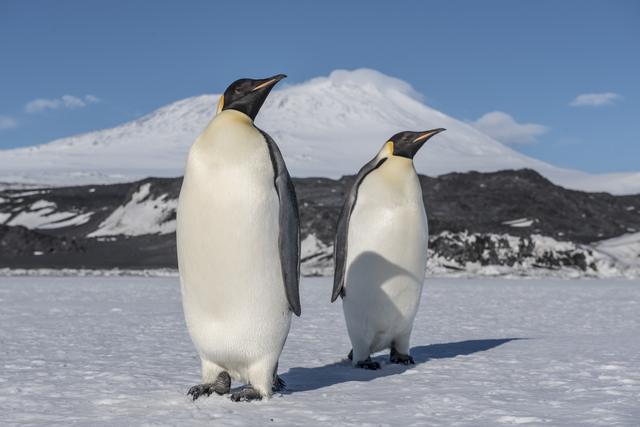
An adult emperor penguin in a crowd of chicks, Antarctica.
In this article
- Penguin quick facts
- How many species of penguin are there?
- How big are penguins?
- How fast can penguins swim?
- How deep can penguins dive?
- How do emperor penguins survive the Antarctic winter?
- Why do penguins steal pebbles?
- Do penguins drink seawater?
- How do penguins sleep?
- Can you see penguins from space?
- Are penguins endangered?
- Frequently asked questions
Penguins cannot fly, but they are some of the most extreme birds on Earth. Emperor penguins dive deeper than any other bird and survive the Antarctic winter without eating for months. Gentoo penguins swim faster than any other penguin. And chinstrap penguins get their sleep in more than 10,000 naps a day, each lasting a few seconds.
Here are the facts: how many kinds of penguin there are, how big they get, how fast and deep they swim, and how they survive in some of the harshest places on the planet.
Penguin quick facts
- Species
- 18, according to BirdLife International
- Smallest
- The little penguin, about 33 cm (13 inches) long and 1 kg (2.2 lb)
- Largest
- The emperor penguin, up to 1.3 metres (4 feet 3 inches) long and 20 to 40 kg (44 to 88 lb)
- Fastest
- The gentoo, up to 36 km/h (22 mph) underwater
- Deepest dive
- 564 metres (1,850 feet), by an emperor penguin
- Range
- The southern hemisphere, from Antarctica to the equator
- Diet
- Fish, krill and squid
- Conservation
- 11 of the 18 species are globally threatened
How many species of penguin are there?
BirdLife International lists 18 species of penguin, and 11 of them are classed as globally threatened on the IUCN Red List. Some scientists split or lump a few species differently, so you will occasionally see slightly different totals.
All penguins are native to the southern hemisphere, but most do not live on the Antarctic ice. Many live on cool, rocky coasts in South America, southern Africa, Australia and New Zealand. One species, the Galápagos penguin, lives near the equator, further north than any other penguin. It is also one of the rarest, and is listed as Endangered.
There are no wild penguins in the Arctic. The birds that look like penguins in the far north, such as puffins and guillemots, belong to a completely different family and can fly.
How big are penguins?
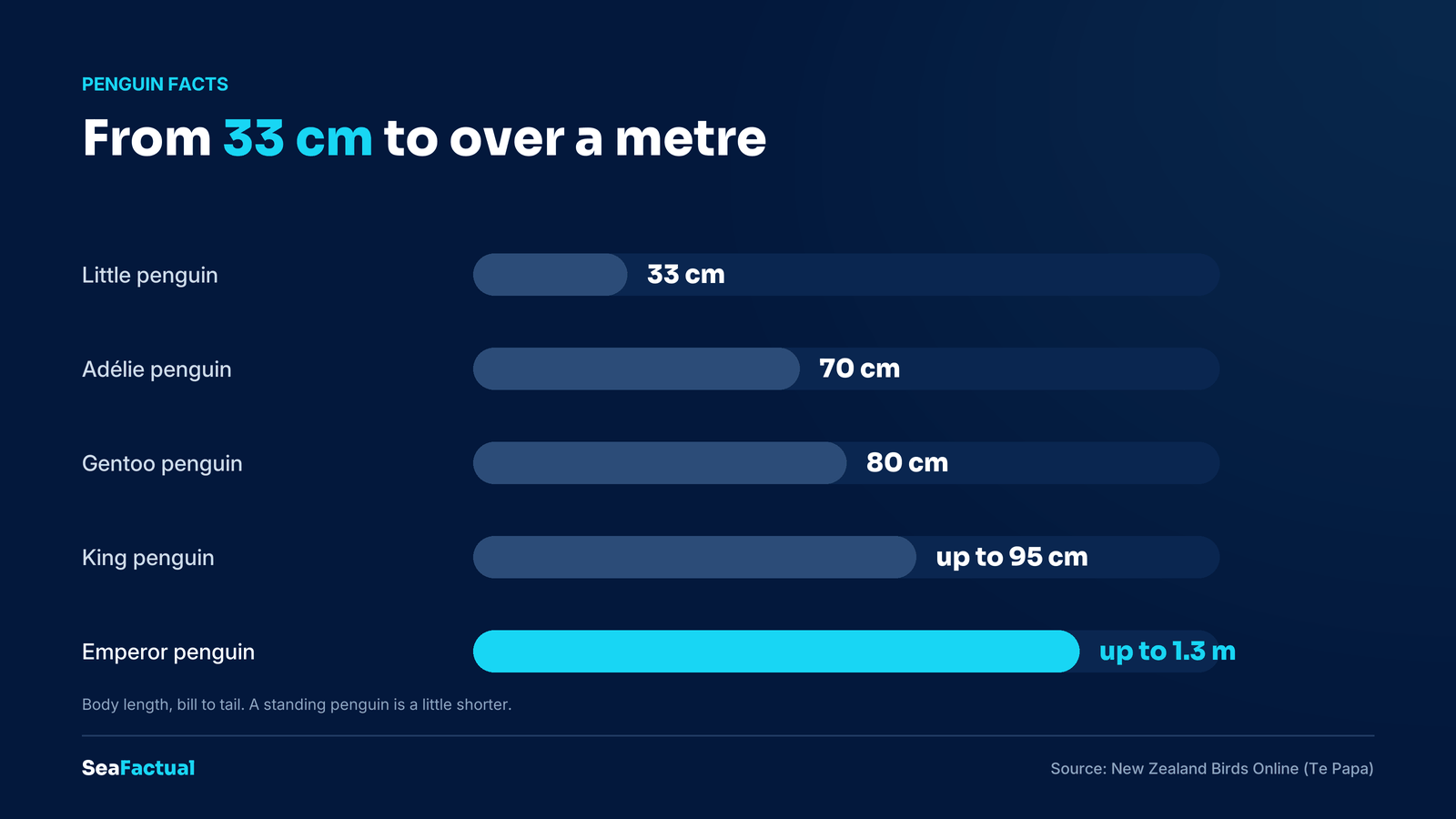
Penguins range from small enough to hold in two hands to as tall as a child. According to New Zealand Birds Online, the little penguin is the smallest, at around 33 cm (13 inches) long and 1 kg (2.2 lb).
At the other end is the emperor penguin, the largest living penguin. It measures 1 to 1.3 metres (3 feet 3 inches to 4 feet 3 inches) from bill to tail and weighs 20 to 40 kg (44 to 88 lb), according to New Zealand Birds Online. Its weight changes hugely through the year, because it builds up fat reserves and then lives off them for months.
The king penguin is the next biggest, at 85 to 95 cm (33 to 37 inches) and 9 to 15 kg (20 to 33 lb).
The giant penguins of the past
Today's emperor is small compared with some extinct penguins. In 2023, scientists described Kumimanu fordycei, a fossil penguin from New Zealand that lived between about 55 and 60 million years ago. Based on its flipper bones, it is estimated to have weighed about 150 kg (330 lb), more than three times as much as the heaviest emperor penguin. It may have been the largest penguin that ever lived.
How fast can penguins swim?
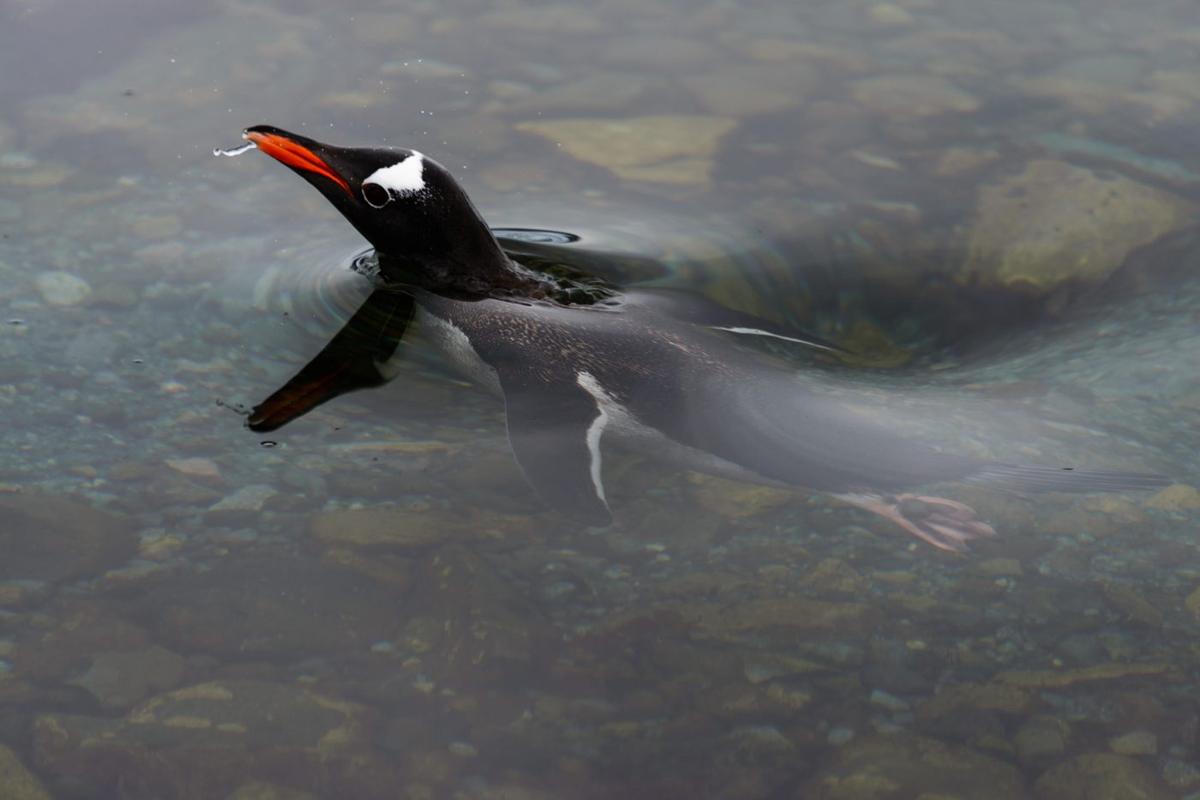
Penguins traded flight for swimming. Their wings have become stiff, narrow flippers that drive them through the water, and their streamlined bodies cut through it with very little drag.
The fastest of all is the gentoo penguin. It can swim underwater at up to 36 km/h (22 mph), the fastest speed recorded for any penguin, according to New Zealand Birds Online. That is a short burst, used to chase prey or escape a predator, rather than a cruising speed.
You can recognise a gentoo by the white patch over each eye and its bright orange bill.
How deep can penguins dive?
Emperor penguins are the deepest-diving birds on Earth. In a study of emperor penguins fitted with depth recorders in Antarctica, the deepest dive reached 564 metres (1,850 feet), and the longest lasted 21.8 minutes. The two records were set by different birds.
Most dives are much shorter and shallower. According to New Zealand Birds Online, emperors typically feed at around 50 metres (165 feet).
Other penguins are impressive divers too:
- King penguin: deepest recorded dive 343 metres (1,125 feet), and the longest 9 minutes 20 seconds
- Adélie penguin: up to 175 metres (575 feet), though it usually fishes above 40 metres (130 feet)
- Gentoo penguin: over 160 metres (525 feet)
The emperor penguin features in our episode 10 Ocean Animals That Hold Incredible World Records for exactly this reason.
How do emperor penguins survive the Antarctic winter?
Emperor penguins do something few animals could survive. They breed on the sea ice during the Antarctic winter, in the dark, the cold and the wind.
After the female lays a single egg, she passes it to the male and heads back to sea to feed. According to New Zealand Birds Online, the male then incubates the egg entirely on his own for 62 to 67 days, balancing it on his feet under a warm fold of skin. He eats nothing at all during that time.
To survive, the males crowd together in their famous huddles during the worst blizzards, sharing body heat. By the time the chick hatches and the female returns, a male can have lost up to 45% of his body weight over the four months he spends at the colony.
The king penguin has an unusual breeding pattern too. Its chicks take so long to raise that it cannot breed every year. Instead, it breeds twice every three years, which New Zealand Birds Online notes is unique among birds.
Why do penguins steal pebbles?
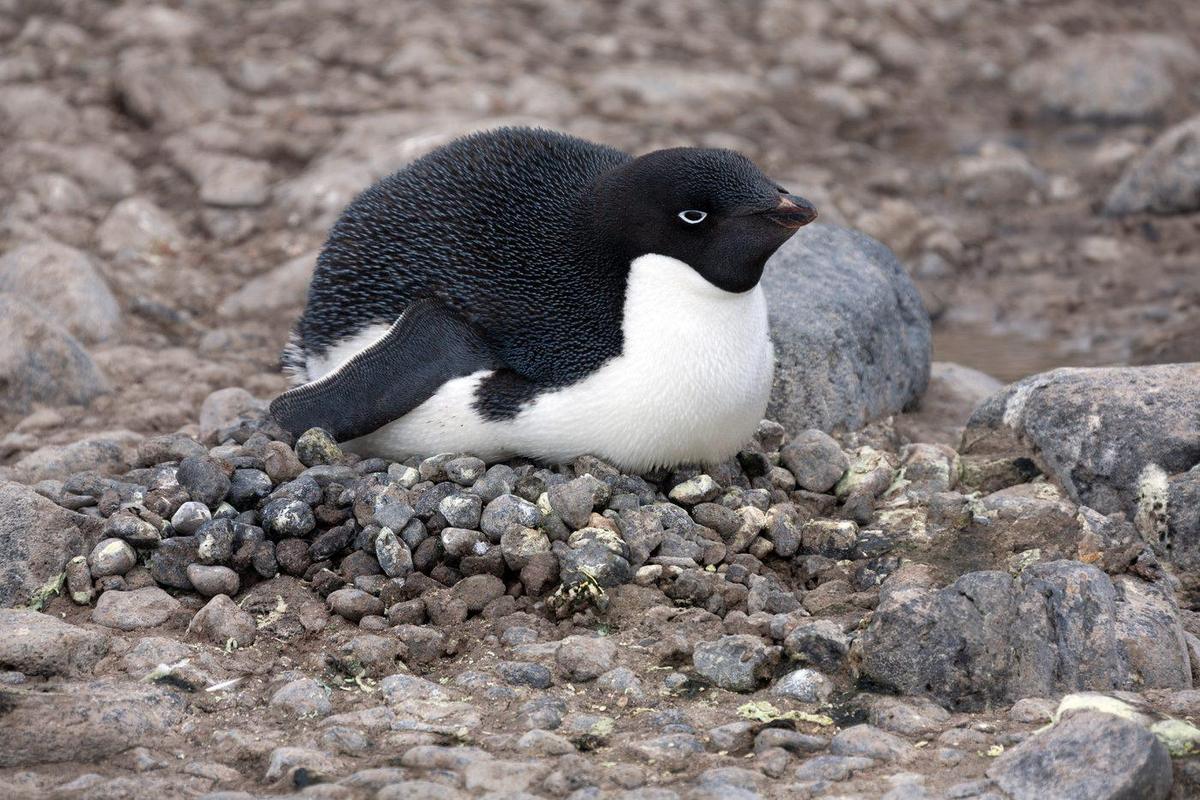
On the rocky shores of Antarctica there is nothing to build a nest from except stones. Adélie penguins lay their two eggs in a small hollow lined with pebbles, which they collect, or steal from neighbouring nests, according to New Zealand Birds Online.
A raised nest of pebbles helps keep the eggs out of meltwater and mud. Good pebbles are in short supply, so penguins regularly sneak them from the nests next door.
Do penguins drink seawater?
Yes. Penguins spend most of their lives at sea and take in a lot of salt from seawater and their food. Like other seabirds, they have a pair of salt glands above their eyes that filter salt from the blood.
According to Audubon and BirdNote, the salty fluid runs out through the nostrils and down grooves in the bill, and the bird shakes it off. The grooves in the skull that hold these glands are especially large in penguins.
How do penguins sleep?
Very briefly, and very often. In a 2023 study, scientists recorded the brain activity of wild chinstrap penguins nesting in Antarctica. The birds nodded off more than 10,000 times a day, in microsleeps lasting on average just 4 seconds.
Those tiny naps added up to more than 11 hours of sleep a day for each half of the brain. Nesting penguins have to guard their eggs from predatory seabirds and aggressive neighbours, and seconds-long sleeps may let them rest while staying almost constantly alert.
Can you see penguins from space?
Not the birds themselves, but their poo. Emperor penguin colonies stay on the same patch of sea ice for months, and their droppings leave large brown stains that show up in satellite images.
In a 2009 study, scientists searched satellite images of the entire Antarctic coastline for these stains. They found 38 emperor penguin colonies, 10 of them previously unknown.
Are penguins endangered?
Many are. BirdLife International lists 11 of the 18 penguin species as globally threatened. The threats include overfishing of their prey, pollution, introduced predators, disease and climate change.
For emperor penguins, the biggest danger is the loss of sea ice. Their chicks cannot swim until they grow waterproof adult feathers, so the ice they are raised on has to last long enough. In 2022, record low Antarctic sea ice led to catastrophic breeding failure: of five emperor colonies in the Bellingshausen Sea region, all but one lost all their chicks when the ice broke up too early.
Frequently asked questions
Where can you see penguins in the wild?
Penguins live right around the southern hemisphere. Well-known places to see them include Antarctica and South Georgia (emperor, king, gentoo, Adélie and chinstrap penguins), the Falkland Islands, Punta Tombo in Argentina, Boulders Beach near Cape Town in South Africa, Phillip Island in Australia, the coasts of New Zealand and the Galápagos Islands. In the northern hemisphere, the only way to see them is in a zoo or aquarium.
Are there penguins at the North Pole?
No. Wild penguins only live in the southern hemisphere. Polar bears and penguins never meet in the wild.
Can penguins fly?
No. Their wings have evolved into stiff flippers for swimming. In the water, though, a penguin's movement looks a lot like flying.
How long do penguins live?
It varies by species. Emperor penguins can live for at least 20 years, according to New Zealand Birds Online. Birdfact has a full guide to how long each penguin species lives.
What do penguins eat?
Mostly fish, krill and squid, caught on dives from the surface. The mix depends on the species and where it lives. Birdfact explains what penguins eat species by species.
What eats penguins?
At sea, leopard seals are their main predator, and some orcas hunt penguins too. On land, eggs and chicks are taken by predatory seabirds such as skuas.
What is the biggest penguin?
The emperor penguin, at up to 1.3 metres (4 feet 3 inches) long and up to about 40 kg (88 lb). The king penguin is second.
Want more?
Follow SeaFactual for a new ocean fact every day, and get the fact of the week in your inbox using the form below.
Sources and further reading
- BirdLife International: List of penguin species
- New Zealand Birds Online: Emperor penguin
- New Zealand Birds Online: Gentoo penguin
- New Zealand Birds Online: Adélie penguin
- New Zealand Birds Online: King penguin
- New Zealand Birds Online: Little penguin
- New Zealand Birds Online: Chinstrap penguin
- Wienecke et al. 2007, Polar Biology: Extreme dives by free-ranging emperor penguins
- Libourel et al. 2023, Science: Nesting chinstrap penguins accrue large quantities of sleep through seconds-long microsleeps
- Fretwell & Trathan 2009, Global Ecology and Biogeography: Penguins from space
- Fretwell et al. 2023, Communications Earth & Environment: Record low 2022 Antarctic sea ice led to catastrophic breeding failure of emperor penguins
- Ksepka et al. 2023, Journal of Paleontology: Largest-known fossil penguin
- Audubon and BirdNote: What happens when seabirds drink saltwater?
Spotted a mistake? Tell us How we fact-check Last checked 21 November 2026