In this article
- 1. Sea otter: the thickest fur on Earth
- 2. Giant clam: the biggest shellfish alive
- 3. Lion's mane jellyfish: longer than a blue whale
- 4. Emperor penguin: the deepest-diving bird
- 5. Elephant seal: two hours on one breath
- 6. Manta ray: the biggest brain of any fish
- 7. Great white shark: the largest predatory fish
- 8. Orca: the ocean's top predator
- 9. Whale shark: the biggest fish on Earth
- 10. Great Barrier Reef: built by animals, seen from space
- Records still waiting to be found
Somewhere in the ocean right now, a jellyfish is trailing tentacles longer than a blue whale. A seal is holding its breath for two hours. And a fish is thinking with the biggest brain of any fish in the sea.
The ocean is home to some of the most extreme record holders on the planet: the deepest divers, the biggest brains, the thickest fur. And number ten is so big you can see it from space. Here are ten ocean animals that hold incredible world records.
1. Sea otter: the thickest fur on Earth
The sea otter has the thickest fur of any animal, with up to a million hairs in every square inch. That is more hair on a patch the size of a stamp than you have on your whole head.
Unlike seals and whales, sea otters have no blubber, so their fur is all that keeps them warm, trapping a layer of air against the skin. To keep it working, they spend hours every day grooming.
Sea otters also use tools, cracking open shells with rocks, and some keep a favourite rock in a pouch of loose skin under their arm. When they sleep, they float on their backs, sometimes holding paws so they don't drift apart.
▶ Watch this part of the episode (0:30)
2. Giant clam: the biggest shellfish alive
The giant clam is the largest shellfish in the world. It can grow more than a metre across, weigh over 200 kilograms (440 lb) and live for more than a hundred years. Once it settles on the reef as a youngster, it stays in the same spot for the rest of its life.
So how does something that never moves get enough food to grow so big? It farms. Its colourful flesh is packed with tiny algae that turn sunlight into sugar, feeding the clam from the inside.
Old stories describe giant clams snapping shut on divers' legs, but there is no evidence it has ever happened. They close far too slowly.
▶ Watch this part of the episode (1:07)
3. Lion's mane jellyfish: longer than a blue whale
The lion's mane is the largest jellyfish known. Its bell can be more than two metres wide, and beneath it trail hundreds of stinging tentacles.
In 1870, one washed up on the coast of Massachusetts with tentacles reported at around 37 metres (120 feet). That is longer than a blue whale, making the lion's mane a contender for the longest animal ever recorded.
Those tentacles form a drifting net that catches fish, shrimp and even other jellyfish. And this giant has no brain, no heart and no blood: it is around 95% water.
▶ Watch this part of the episode (1:44)
4. Emperor penguin: the deepest-diving bird
Emperor penguins are the tallest and heaviest penguins, and the deepest-diving birds on Earth. One was recorded diving more than 560 metres (1,800 feet) down, and they can stay under for over 20 minutes.
Their most extreme record happens on land. In the middle of the Antarctic winter, the males balance a single egg on their feet for about two months, through blizzards and temperatures that can fall below −40 °C (−40 °F), without eating the whole time. Thousands of them huddle together and slowly shuffle, so every bird takes a turn in the warm centre and on the freezing edge.
▶ Watch this part of the episode (2:20)
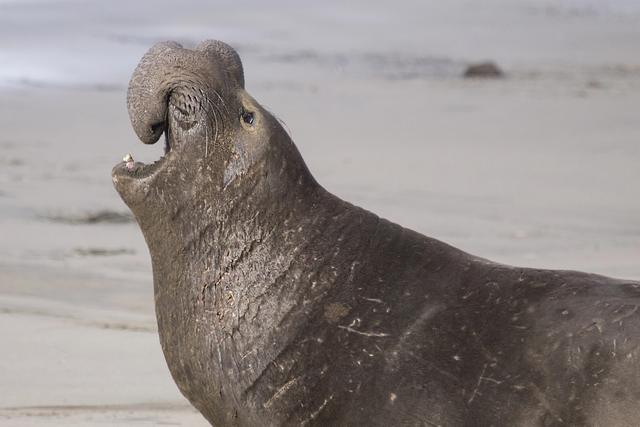
5. Elephant seal: two hours on one breath
Southern elephant seals are the largest seals in the world. A big male can weigh around four tonnes, as much as a pickup truck.
They are also elite divers. They regularly dive more than a kilometre down, have been tracked below 2,000 metres (6,500 feet) and can hold their breath for up to two hours. At sea they spend almost their whole lives underwater, surfacing for just a few minutes between dives.
Scientists recently discovered how they sleep out there: they take short naps while sinking, spiralling slowly down into the deep, adding up to only about two hours of sleep a day.
▶ Watch this part of the episode (2:56)
6. Manta ray: the biggest brain of any fish
Giant manta rays can measure seven metres from wingtip to wingtip, and they have the biggest brain of any fish.
That brain seems to get used. In one study, captive mantas were shown a mirror and behaved in ways that suggested they might recognise themselves, something very few animals can do.
Mantas feed on plankton, gliding through the water with their mouths wide open, and they have to keep swimming to breathe. They also visit cleaning stations on the reef, where small fish pick parasites off their skin, and they appear to remember where those stations are.
▶ Watch this part of the episode (3:36)
7. Great white shark: the largest predatory fish
The great white is the largest predatory fish on Earth, reaching around six metres long and more than two tonnes.
It has around 300 teeth arranged in rows. When one falls out, another moves forward to replace it, so a single shark can get through thousands in a lifetime. Great whites can also sense the tiny electric fields given off by the muscles of living animals, using jelly-filled pores on their snouts.
And unlike most fish, they can keep parts of their body warmer than the surrounding water, which helps them stay fast and powerful in cold seas.
▶ Watch this part of the episode (4:10)
8. Orca: the ocean's top predator
Even the great white has something to fear. Orcas, or killer whales, are the largest members of the dolphin family, and they sit at the very top of the ocean food chain. Off South Africa, a pair of orcas has been hunting great white sharks, and when they show up, the sharks flee the area for weeks.
Orcas hunt as a team, with different tactics for different prey, from washing seals off ice with waves to herding fish into tight balls. Each family group has its own calls, like a local dialect, and groups are led by the oldest females, who can live to around 90.
▶ Watch this part of the episode (4:45)
9. Whale shark: the biggest fish on Earth
The whale shark is the biggest fish on Earth, growing up to around 18 metres (60 feet) long. But this giant is completely harmless. It feeds on plankton, fish eggs and tiny shrimp, filtering thousands of litres of water an hour through its huge open mouth.
Every whale shark has its own pattern of spots, like a fingerprint, and scientists use software originally designed for mapping stars to tell individuals apart. Whale sharks can dive more than a kilometre and a half deep, cross entire oceans and may live for more than a hundred years.
▶ Watch this part of the episode (5:22)
10. Great Barrier Reef: built by animals, seen from space
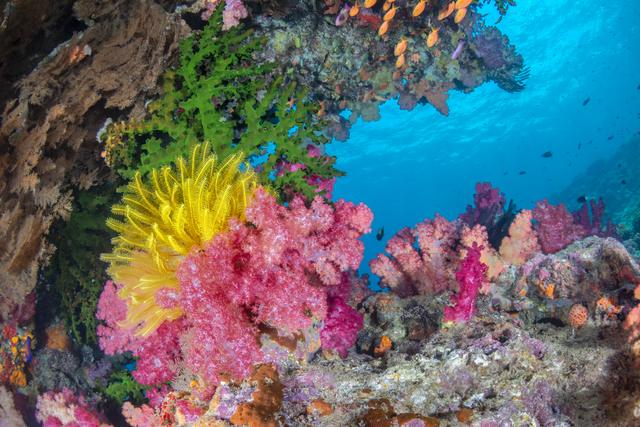
The biggest of them all. The Great Barrier Reef stretches more than 2,300 kilometres (1,400 miles) along the coast of Australia. It is the largest structure ever built by living things, and you can see it from space.
It was built by animals. Corals might look like plants or rocks, but each one is a colony of tiny animals called polyps, relatives of jellyfish. Over thousands of years, billions of them have laid down limestone skeletons layer by layer, creating a home for more than 1,500 species of fish.
Once a year, after a full moon, many corals release their eggs at the same time, filling the water like an underwater snowstorm.
▶ Watch this part of the episode (5:58)
Records still waiting to be found
From fur and brains to dives and reefs, the ocean holds records that nothing on land can match. And with so much of it still unexplored, some of its biggest records may not have been discovered yet.
Which record surprised you most? Tell us in the comments on the episode, and if you missed it, read 10 ocean animals that break the rules of nature.
Sources and further reading
- NOAA Fisheries
- Smithsonian Ocean
- Australian Institute of Marine Science
- Great Barrier Reef Marine Park Authority
- Kendall-Bar et al. 2023, Science: Brain activity of diving seals reveals short sleep cycles at depth
- Ari & D'Agostino 2016, Journal of Ethology: Self-directed behaviours in giant manta rays
- Monterey Bay Aquarium
Spotted a mistake? Tell us How we fact-check Last checked 22 November 2026