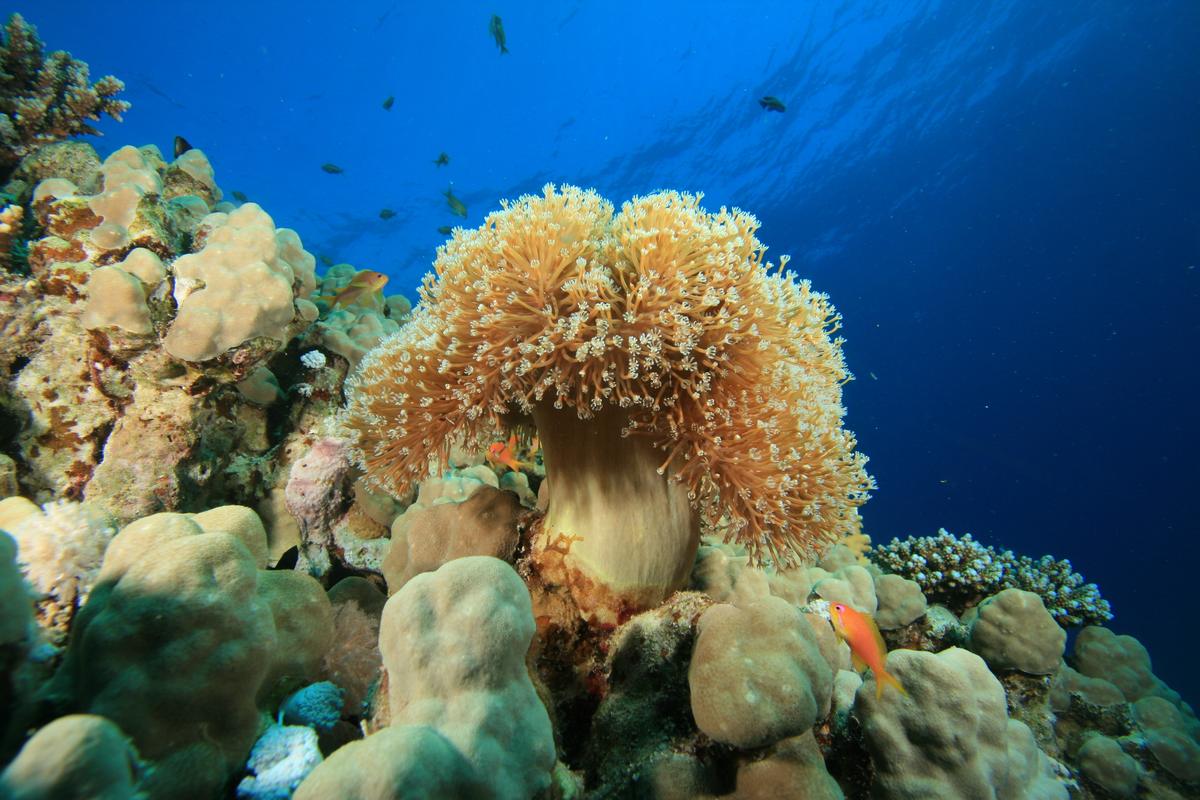
Soft corals on a reef in Fiji.
In this article
Coral looks like rock, and it can look like a plant, but it is neither. Every coral is made of tiny animals, related to jellyfish, that work in partnership with algae living inside their bodies. Together they have built the largest structures made by living things on Earth.
Here are the facts about coral: what it is, how reefs grow, how corals eat and breed, what coral bleaching is, and why reefs matter so much.
Coral quick facts
- What it is
- An animal, made up of tiny polyps, related to jellyfish and sea anemones
- Partner
- Microscopic algae called zooxanthellae live inside most reef-building corals and feed them
- Growth
- About 0.3 to 2 cm (0.1 to 0.8 inches) a year for massive corals, up to 10 cm (4 inches) a year for branching corals
- Reefs
- Cover only about 1% of the ocean but support at least 25% of marine life
- Biggest reef
- The Great Barrier Reef, more than 2,300 km (1,400 miles) long
- Breeding
- Many species spawn together, on a few nights a year
- Biggest threat
- Coral bleaching caused by marine heatwaves
Is coral an animal, plant or rock?
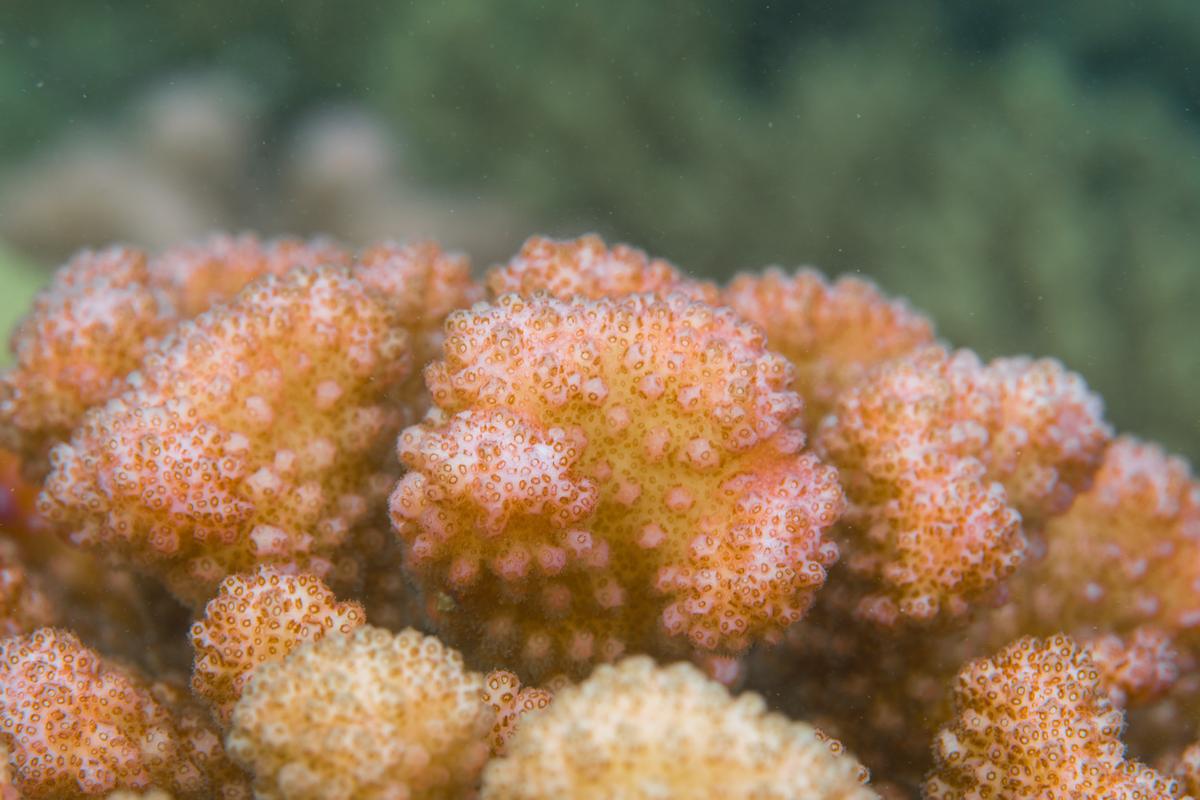
Coral is an animal. NOAA explains that most of what we call "a coral" is actually a colony of hundreds to thousands of tiny animals called polyps, most no thicker than a coin. Each soft-bodied polyp has a ring of tentacles around a mouth, and in hard, or stony, corals each one builds a hard limestone (calcium carbonate) skeleton beneath itself.
As polyps grow, die and are replaced, their skeletons build up layer on layer. Over thousands of years this creates coral reefs, the largest structures of biological origin on Earth.
Corals are cnidarians, the same group as jellyfish and sea anemones. Like jellyfish, their tentacles carry stinging cells.
How do corals eat?
Corals feed in two ways. At night, most polyps extend their tentacles and use stinging cells to catch tiny drifting animals called zooplankton, and sometimes even small fish.
But most reef-building corals get much of their energy from zooxanthellae: microscopic algae that live inside their tissues. The coral gives the algae shelter and the carbon dioxide they need; in return the algae use sunlight to make sugars and other nutrients. According to NOAA, as much as 90% of the food the algae make is passed to the coral.
That partnership is why reef-building corals need clear, sunlit water, and why they live mostly in the shallow tropics. The algae also give many corals their colours.
How fast does coral grow?
Slowly. NOAA says massive, boulder-shaped corals grow about 0.3 to 2 cm (0.1 to 0.8 inches) a year, and branching corals up to about 10 cm (4 inches) a year. It can take up to 10,000 years for a coral reef to form, and from 100,000 to 30 million years for large barrier reefs and atolls to fully develop.
There are three main kinds of reef:
- Fringing reefs grow right next to the shore and are the most common
- Barrier reefs run parallel to the coast, separated from it by a lagoon
- Atolls are rings of reef around a lagoon, formed where a volcanic island has sunk while the coral kept growing upward
Only hard corals build reefs. Soft corals, like the colourful ones in the photo at the top of this page, have no stony skeleton but add to the shape and life of the reef.
Why are coral reefs so important?
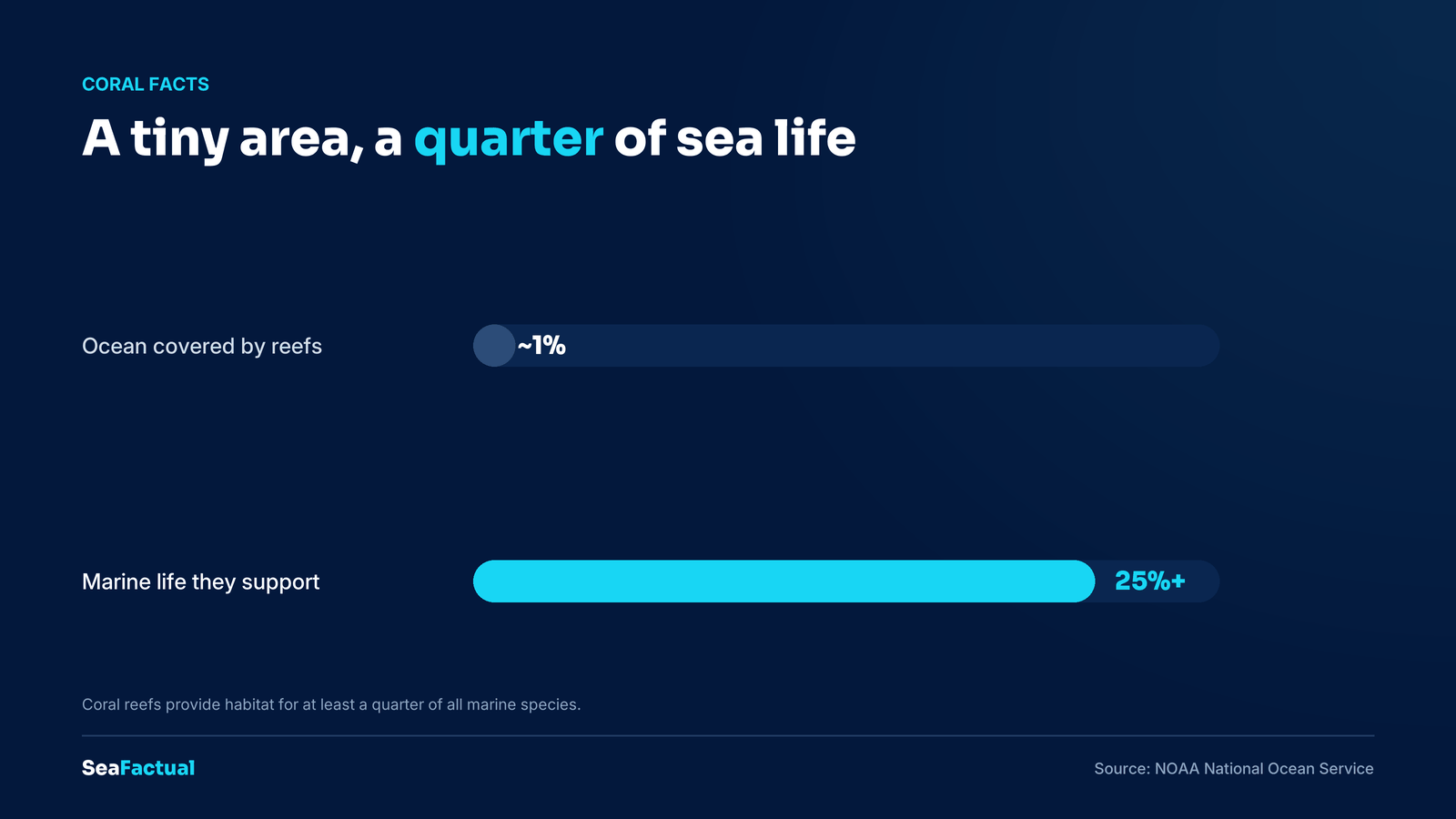
Coral reefs are among the richest habitats on Earth. NOAA says they are home to more than 4,000 species of fish, corals and other life and that, while they cover only about 1% of the world's oceans, they provide habitat for at least 25% of marine life, with many reef species still undiscovered.
Reefs also:
- Protect coastlines from waves, storms and floods
- Feed people: many fish caught for food depend on reefs for part of their lives
- Support jobs through fishing and tourism worth billions of dollars
- Hold promise for medicine, with compounds from reef animals being studied as treatments for diseases including cancer
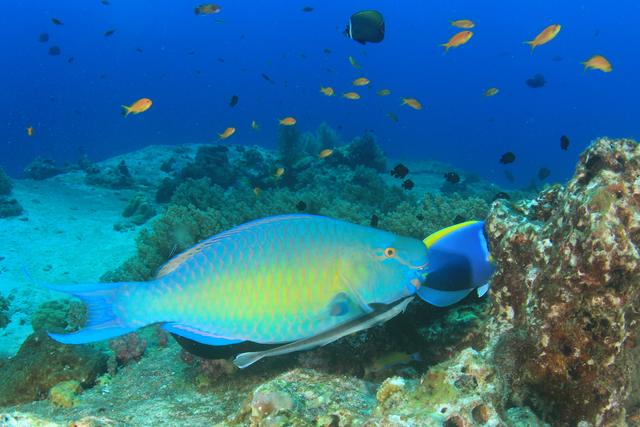
They even make beaches. NOAA notes that parrotfish grind up coral as they feed and excrete it as fine white sand, hundreds of pounds a year for a single fish.
How do corals reproduce?
Corals can reproduce in two ways. Polyps can clone themselves, budding off new polyps to grow the colony. But about three-quarters of stony corals also produce eggs and sperm, according to NOAA.
Most of these are broadcast spawners. On many reefs, colonies of many species release their eggs and sperm into the water at the same time, in one of nature's great spectacles. The timing is set by the water temperature and day length, the phase of the moon and the time of sunset. On the Great Barrier Reef, mass spawning happens on a few nights after a full moon in late spring and early summer, filling the water with what looks like an upside-down snowstorm.
The fertilised eggs grow into tiny larvae called planulae, which drift for days or weeks before settling on a hard surface and starting a new colony. Very few survive.
What is coral bleaching?
When corals are stressed, especially by water that is too warm for too long, they expel the algae living in their tissues. Without them, the coral's white skeleton shows through its clear tissue, and it turns completely white. This is coral bleaching.
A bleached coral is not dead. NOAA explains that if conditions return to normal quickly, corals can take their algae back and recover. But if the stress continues, they starve and die. In 2005, the United States lost half of its coral reefs in the Caribbean in a single year because of a massive bleaching event.
In April 2024, NOAA confirmed that the world was experiencing the fourth global coral bleaching event on record, and the second in ten years. Mass bleaching was confirmed from Florida, the Caribbean and Brazil to the Great Barrier Reef, the South Pacific, the Red Sea and the western Indian Ocean.
As the oceans warm, bleaching is becoming more frequent and more severe. Pollution, overfishing, coral disease and outbreaks of coral-eating crown-of-thorns starfish add to the pressure.
The Great Barrier Reef
The biggest coral reef system on Earth is the Great Barrier Reef, off Queensland in north-eastern Australia. It stretches more than 2,300 km (1,400 miles) and is made of thousands of individual reefs. It is the largest structure built by living things and can be seen from space. The Great Barrier Reef Marine Park Authority manages it as a marine park and World Heritage Area.
It is one of the stars of our episode 10 Ocean Animals That Hold Incredible World Records.
Frequently asked questions
Is coral alive?
Yes. A living coral is a colony of animals called polyps. The hard white material often sold as "coral" is the skeleton left behind after the animals have died.
Can coral recover from bleaching?
Yes, if the water cools again before the coral starves. Corals can take back their algae and regain their colour within weeks or months. Repeated or very long heatwaves give them less time to recover, and more corals die.
Do corals sting?
Many do. Coral polyps have stinging cells, like their jellyfish relatives, though most are too weak to hurt people. Fire coral, which is actually more closely related to some jellyfish-like animals than to true reef corals, can give a painful sting. Never touch coral: it damages the polyps and can cut or sting you.
Where can you see coral reefs?
Coral reefs grow in warm, shallow seas in more than 100 countries. Famous places to see them include the Great Barrier Reef and Ningaloo Reef in Australia, the Red Sea in Egypt and Jordan, the Maldives, Indonesia's Raja Ampat, Fiji, the Florida Keys and the Mesoamerican Reef off Belize and Mexico. Cold-water corals also grow in deep, dark water off Norway, Scotland and Ireland.
What eats coral?
Parrotfish, butterflyfish, some snails and the crown-of-thorns starfish all eat coral. Read more in our parrotfish facts and starfish facts.
Want more?
Follow SeaFactual for a new ocean fact every day, and get the fact of the week in your inbox using the form below.
Sources and further reading
- NOAA National Ocean Service: Are corals animals or plants?
- NOAA Corals Tutorial: What is zooxanthellae?
- NOAA Corals Tutorial: How do coral reefs form?
- NOAA Corals Tutorial: How do corals reproduce?
- NOAA Corals Tutorial: Why are coral reefs important?
- NOAA National Ocean Service: What is coral bleaching?
- NOAA: NOAA confirms 4th global coral bleaching event
- Great Barrier Reef Marine Park Authority
Spotted a mistake? Tell us How we fact-check Last checked 22 November 2026