A sea otter resting on its back in a kelp bed.
In this article
A sea otter has more hair on a patch of skin the size of a postage stamp than most people have on their whole head. It cracks open shells with rocks it carries in a pouch under its arm, eats around a quarter of its body weight every day, and protects entire kelp forests just by eating sea urchins.
Here are the facts about sea otters: their record-breaking fur, their tools, what they eat, why they sometimes hold hands and how they came back from the brink of extinction.
Sea otter quick facts
- Scientific name
- Enhydra lutris
- Family
- The weasel family, of which it is the largest member
- Length
- Up to about 1.5 metres (5 feet)
- Weight
- Males 36 to 45 kg (80 to 100 lb); females 23 to 32 kg (50 to 70 lb)
- Fur
- Up to a million hairs per square inch, the densest of any mammal
- Diet
- Sea urchins, crabs, clams, mussels and other shellfish
- Lifespan
- Up to about 23 years in the wild
- Range
- Coasts of the North Pacific, from Japan and Russia to Alaska, Canada and California
How big are sea otters?
The sea otter is the largest member of the weasel family, according to the Alaska Department of Fish and Game. Adults can grow up to about 1.5 metres (5 feet) long. Males usually weigh 36 to 45 kg (80 to 100 lb) and sometimes more, while females are smaller, at 23 to 32 kg (50 to 70 lb).
Unlike seals, sea lions and whales, it spends almost its whole life in the water without a thick layer of fat to keep it warm.
Why do sea otters have such thick fur?
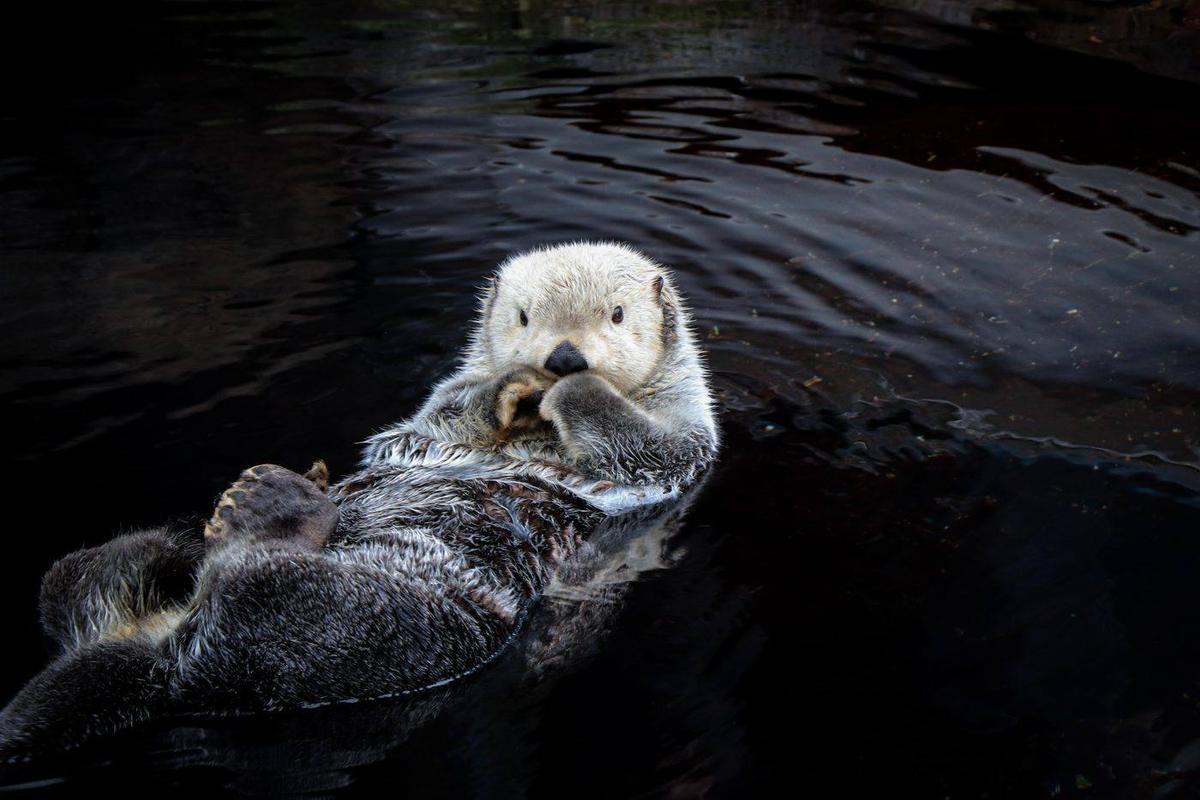
Sea otters have the densest fur of any mammal, with 850,000 to one million hairs per square inch, according to the US National Park Service. That works out at roughly 130,000 to 155,000 hairs in every square centimetre.
They need it. NOAA's Ocean Today points out that the sea otter is the only marine mammal without blubber. Instead, two layers of fur trap a layer of air next to the skin, so the cold water never touches it.
That only works if the fur is kept clean. According to the Monterey Bay Aquarium, sea otters spend many hours a day grooming, coating their fur with natural oils and fluffing it up with insulating air bubbles. Fur matted by oil loses its insulation, which is why oil spills are so dangerous to sea otters.
The sea otter's fur is one of the reasons it features in our episode 10 Ocean Animals That Hold Incredible World Records.
What do sea otters eat?
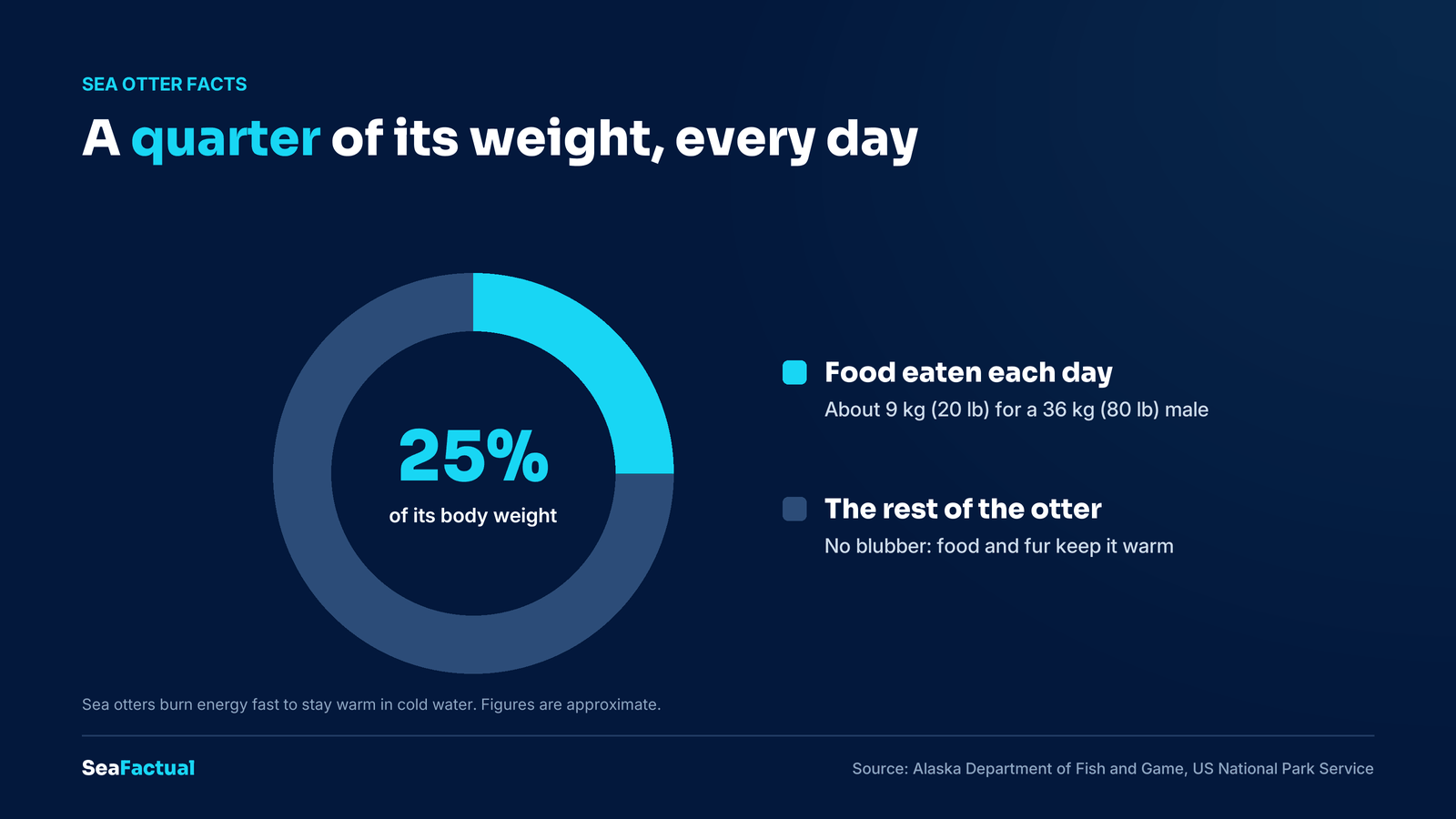
Keeping warm without blubber takes a lot of energy. To maintain its weight, a sea otter must eat about 25% of its body weight every day, according to the Alaska Department of Fish and Game. The National Park Service puts it at 25 to 30%. For a large male, that is roughly 9 to 11 kg (20 to 25 lb) of food a day.
Their main prey includes:
- Sea urchins
- Crabs, clams and mussels
- Octopus, fish and other marine invertebrates
They dive to the seabed to find it. Dives usually last one to two minutes, but sea otters can hold their breath for more than five minutes and dive anywhere from 1.5 to 75 metres (5 to 250 feet) deep.
Individual otters can be fussy. The National Park Service notes that one otter may eat mostly urchins and crabs, while its neighbour eats mostly fish.
Do sea otters really use tools?
Yes. Sea otters are one of the few mammals that regularly use tools. Floating on its back, a sea otter will rest a rock on its chest and smash a shell against it, or hit the shell with the rock, until it cracks open.
They even have somewhere to keep their tools. A sea otter has a pouch of loose skin under each forearm where it stores food it collects on a dive, and a favourite rock, according to NOAA and the Alaska Department of Fish and Game.
Tools may also save their teeth. In a 2024 study in Science, researchers followed 196 radio-tagged sea otters in California. Otters that used tools could open bigger, harder prey, and suffered less tooth damage. The effect was strongest in females, which used tools the most. When favourite prey becomes scarce, tools let otters switch to tougher food that would otherwise wear down their teeth.
Why do sea otters hold hands?
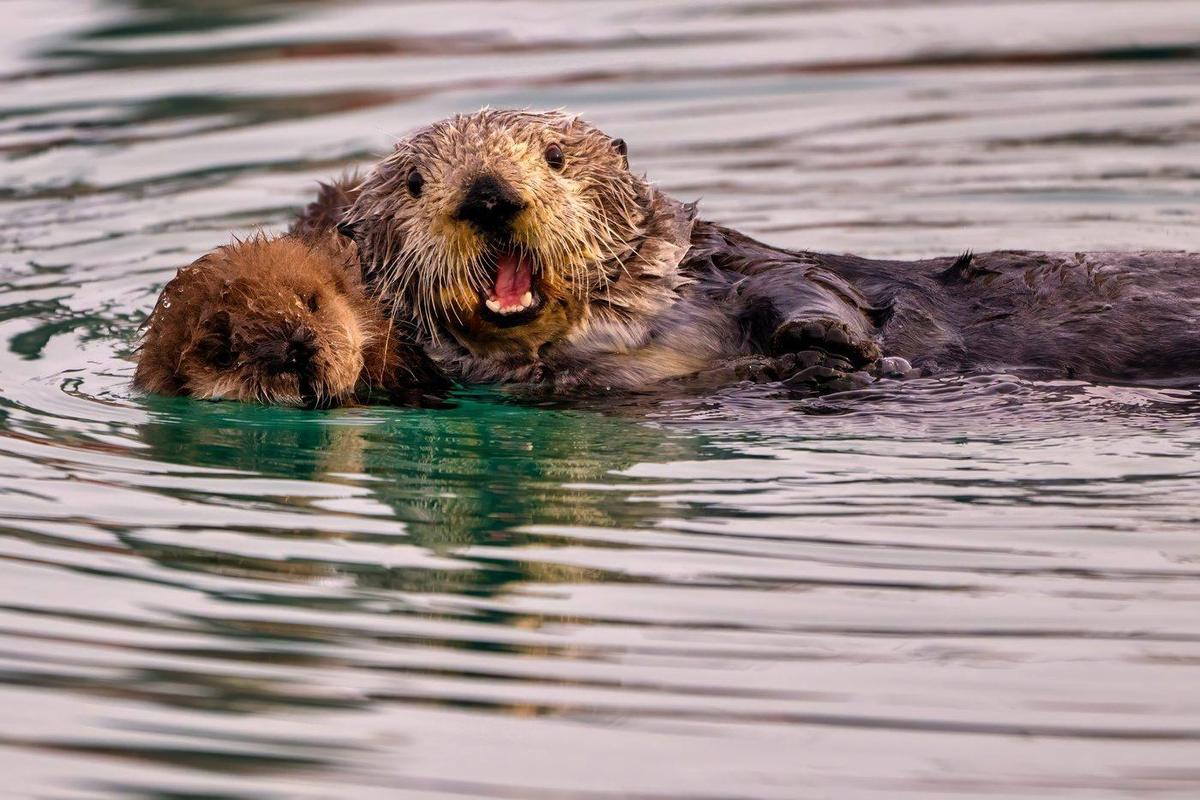
Sea otters sleep floating on their backs, and they need a way to stop drifting away. According to IFAW, they often wrap themselves in kelp to stay anchored while they sleep, and some hold paws with other otters so they do not float apart. A group of resting sea otters is called a raft.
Holding hands is less common in the wild than the famous videos suggest, but it does happen, and mothers keep hold of their pups.
Pups weigh 1.4 to 2.3 kg (3 to 5 lb) at birth, according to the Alaska Department of Fish and Game. Unlike river otters, which keep their young beside them, a sea otter mother carries her pup on her chest as she floats.
How do sea otters protect kelp forests?
Sea otters are a classic keystone species: an animal whose effect on its habitat is far bigger than its numbers suggest.
In a famous 1974 study, scientists compared islands in Alaska's Aleutian chain with and without sea otters. Where otters lived, sea urchins were scarce and kelp forests thrived. Where otters were missing, urchins had multiplied and grazed the kelp away, leaving bare seabed known as urchin barrens.
The same thing happens in seagrass meadows. A 2013 study at Elkhorn Slough in California found that when sea otters returned, they ate crabs that would otherwise eat the small grazers that keep seagrass clean, and the seagrass recovered, even in water polluted by farm runoff.
Are sea otters endangered?
Sea otters came very close to disappearing. Before commercial hunting began in the mid-1700s, there were an estimated 150,000 to 300,000 sea otters around the North Pacific, according to the US Marine Mammal Commission. Hunted for their fur, they fell to as few as 1,000 worldwide by the early 1900s, according to the National Park Service.
In 1911, an international treaty between the United States, Japan, Great Britain and Russia banned the hunting. Sea otters have since recovered across much of their old range, but not all of it.
Globally, the sea otter is listed as Endangered on the IUCN Red List, according to Duke University's OBIS-SEAMAP. The southern sea otter of California is still listed as threatened under the US Endangered Species Act. Its most recent full estimate was 2,962 otters in 2019, and the Marine Mammal Commission reports that shark bites appear to be a major factor stopping it from spreading along the coast. Oil spills, disease and harmful algal blooms are other threats.
Frequently asked questions
Where can you see sea otters in the wild?
Along the coasts of the North Pacific. Good places include Monterey Bay and Morro Bay in California, Washington's outer coast, Vancouver Island in British Columbia, and many parts of coastal Alaska, such as Kachemak Bay, Prince William Sound and Kenai Fjords. Sea otters also live in Russia's Kuril and Commander Islands and around eastern Hokkaido in Japan. They are not found in the Atlantic.
What is the difference between a sea otter and a river otter?
Sea otters live almost entirely at sea, float on their backs, and carry their pups on their chests. River otters are a group of several different species that live mainly in rivers and lakes, spend more time on land and do not float on their backs. Some river otters, like the Eurasian otter, also hunt along sea coasts.
Are sea otters dangerous?
Sea otters are wild animals with powerful jaws, and they can bite if approached. In the United States it is illegal to disturb them, so watch them from a distance.
How long do sea otters live?
The maximum estimated lifespan of a sea otter in the wild is about 23 years, according to the National Park Service.
What eats sea otters?
Sharks, orcas and bald eagles, which can take pups. In California, shark bites are now one of the leading causes of death for sea otters.
Want more?
Follow SeaFactual for a new ocean fact every day, and get the fact of the week in your inbox using the form below.
Sources and further reading
- US National Park Service: Sea otter
- Alaska Department of Fish and Game: Sea otter
- US Marine Mammal Commission: Southern sea otter
- NOAA Ocean Today: Sea otter anatomy
- Monterey Bay Aquarium: Sea otter
- IFAW: Sea otters
- Duke University OBIS-SEAMAP: Sea otter, Enhydra lutris
- Law et al. 2024, Science: Tool use increases mechanical foraging success and tooth health in southern sea otters
- Estes & Palmisano 1974, Science: Sea otters: their role in structuring nearshore communities
- Hughes et al. 2013, PNAS: Recovery of a top predator mediates negative eutrophic effects on seagrass
Spotted a mistake? Tell us How we fact-check Last checked 21 November 2026